
 Indonesia
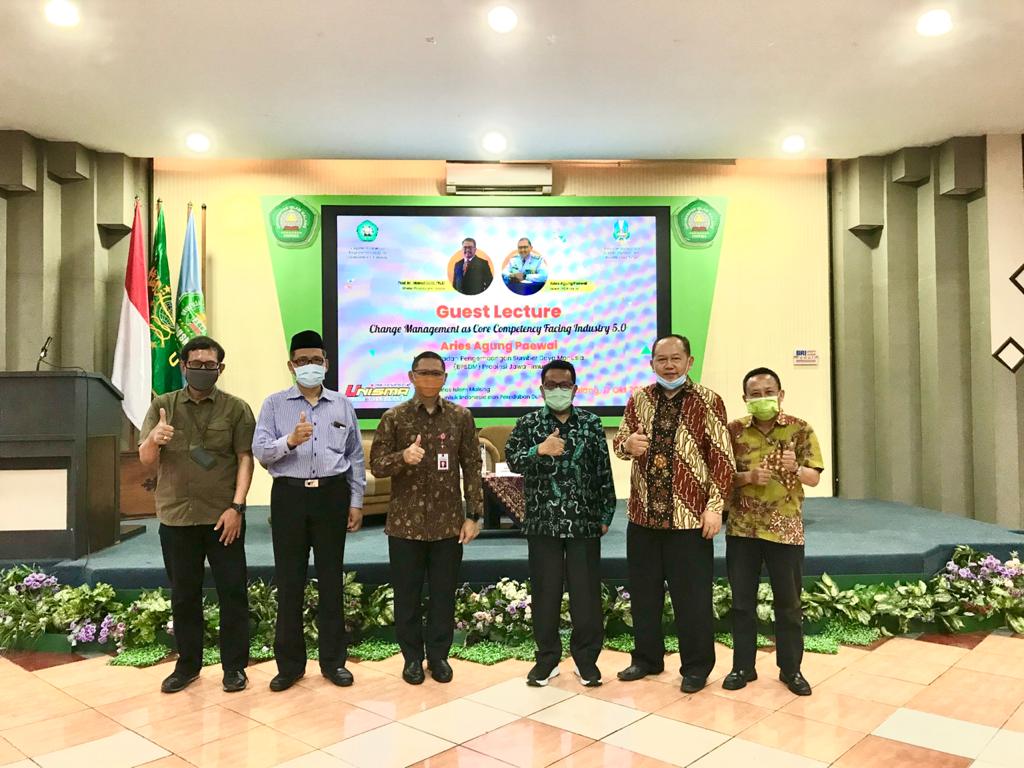
Today, Saturday, October 17, 2020, Masters in Management program hosted a guest lecture titled “Change Management as Core Competency Facing Industry 5.0,” featuring Aries Agung Paewai, Head of East Java Province’s Human Resource Development Agency (BPSDM).
Ahead of the keynote address, Prof. M. Mas’ud Said, PhD, Director of the Postgraduate Program, and Prof. Dr. Maskuri, M.Si, Rector of Universitas Islam Malang, delivered opening remarks. In his address, the Professor of Government Studies explained why the program had invited BPSDM to speak.
Part of the reason lies in the Masters in Management program’s two areas of distinction change management and organizational management, both of which carry a strong human resource development component. “We are now living in the era of coordination and collaboration,” he said.
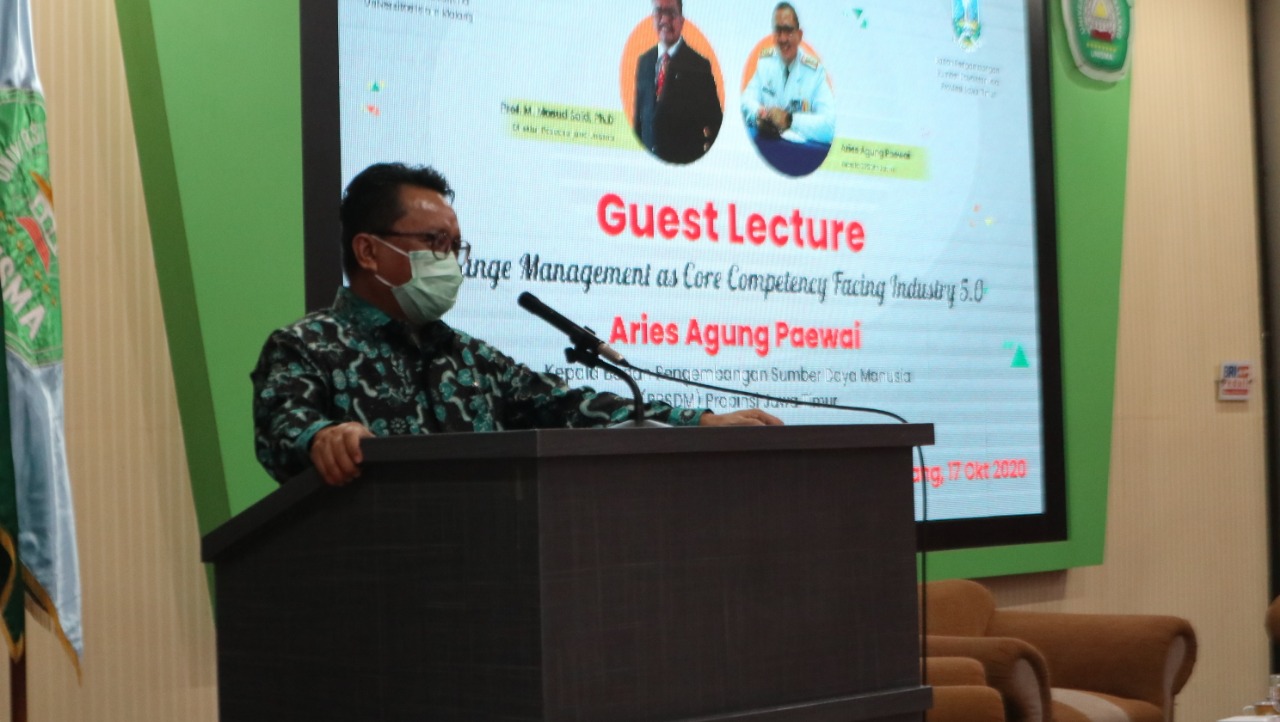
The Postgraduate Director delivering opening remarks at the Guest Lecture
Rector Maskuri reminded attendees that management holds a place of importance in Islamic teaching. He pointed, for instance, to the practice of recording debts, a directive from Allah that he cited as evidence of Islam’s attentiveness to sound management.
Following the opening remarks, the event moved to the signing of a Cooperation Agreement between the Master of Management Study Program and East Java’s Human Resource Development Agency (BPSDM), a formal follow-up to the earlier memorandum of understanding between Universitas Islam Malang and the East Java Provincial Government.
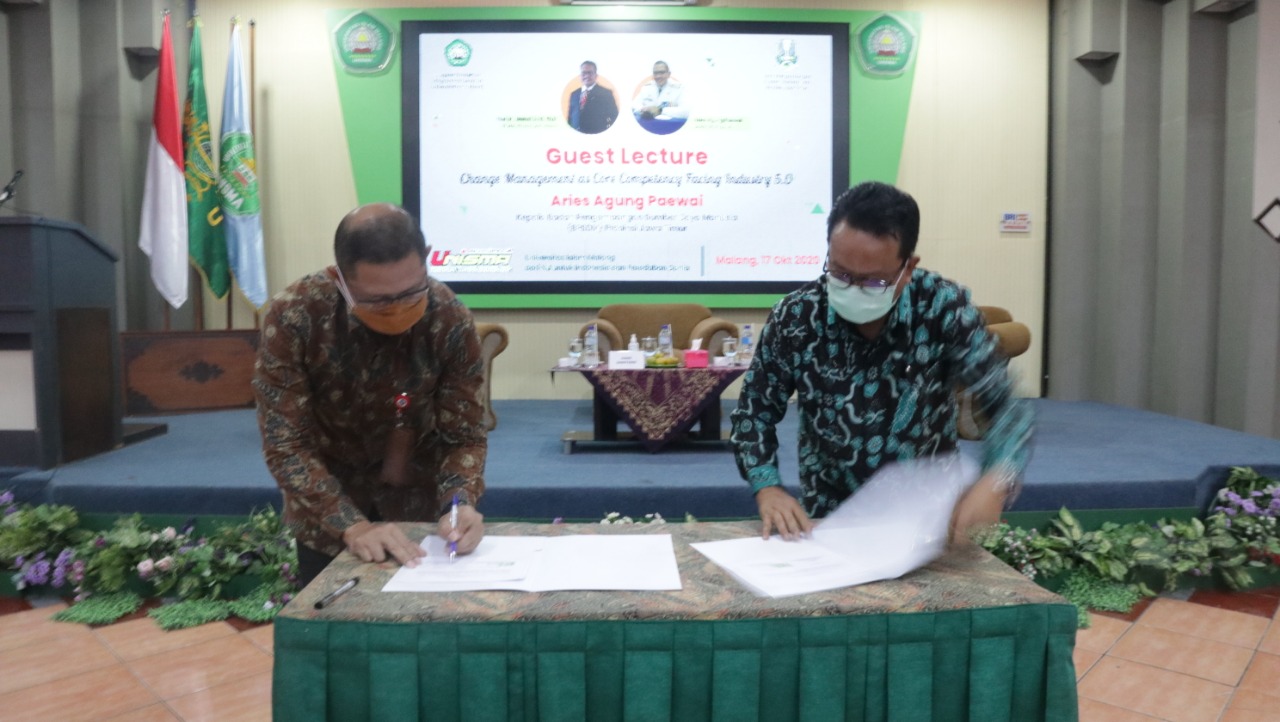
Cooperation Agreement signing between the Master of Management Study Program and East Java’s BPSDM
Aries Agung Paewai’s presentation, titled “Developing Superior Human Resources to Face Industry 5.0,” identified disruption as one of the fiercest challenges facing today’s workforce, one that threatens anyone unprepared for sweeping change.
He opened by framing the moment as a call for collaboration in safeguarding the national economy, with every sector working shoulder to shoulder to weather the pandemic. Recovery, he argued, has to be collective, a shared effort to reconnect people with their economic lives, down to something as basic as restoring public confidence in banks.
The scale of disruption now underway has reshaped the employment landscape, with automation already claiming a significant share of jobs.
Yet not every task can be automated. Human creativity and innovation remain irreplaceable, and new opportunities continue to emerge alongside the disruption giving rise to entirely new categories of work that didn’t exist before.
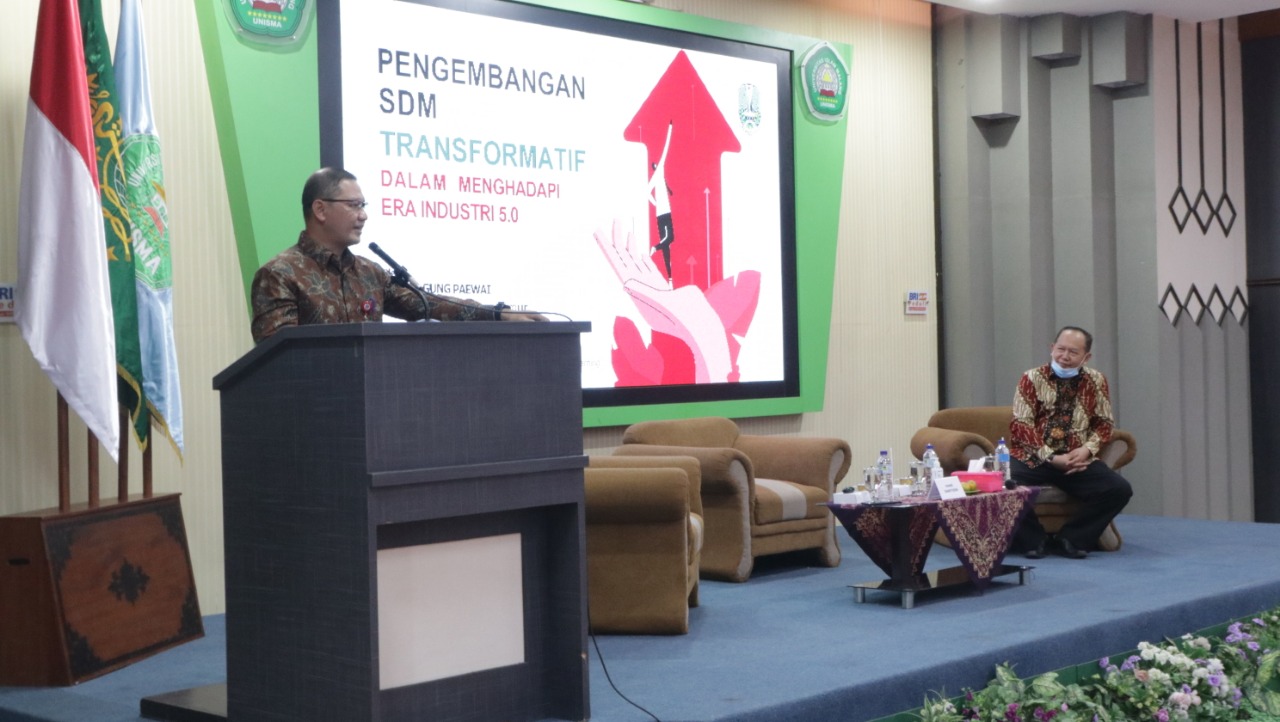
Aries Agung Paewai speaking as guest lecturer
Disruption, he added, is also forcing bureaucracies to change. Public institutions are now expected to deliver services built on speed, transparency, and interconnection, a concept that extends beyond administrative boundaries to encompass real coordination, collaboration, and action. Change management, he concluded, is no longer optional for either the public or private sector. (AL/NAD/PPS)
