
 Indonesia
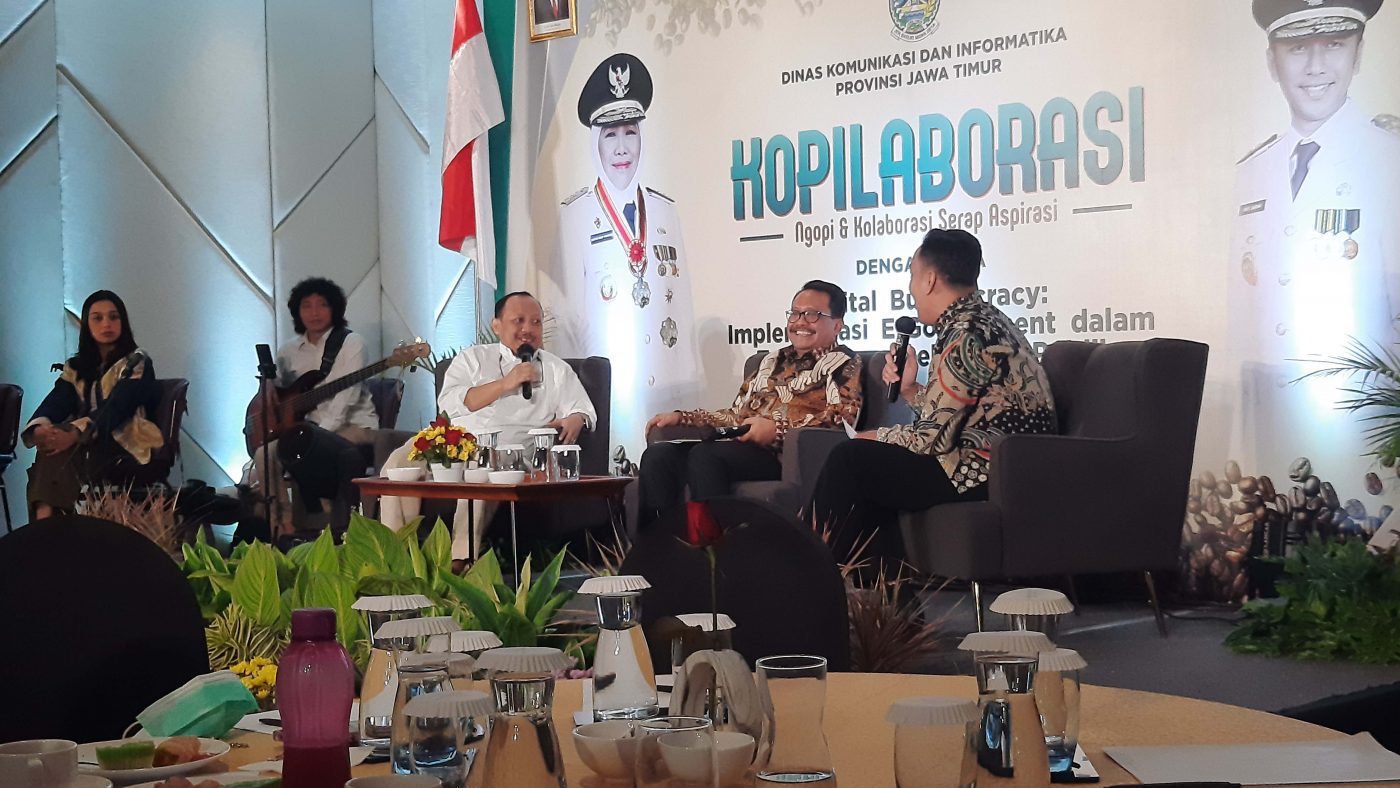
The Director of Unisma’s Postgraduate Program delivered a presentation on digital bureaucracy to communication and information offices across East Java. The presentation took place during Kopilaborasi, held at Grand Mercure Malang on November 14, 2022.
Kopilaborasi is an East Java Kominfo initiative run in partnership with various stakeholders. For this event, the program collaborated with TV9 and the Government Learning Centre.
According to Prof. Mas’ud, the groundwork for e-government was essentially laid back in 2000, when the government began releasing official websites for individual cities and regencies. “If a regency or city still doesn’t have a website today, call it a community association, not a government,” he said.
Read also: Postgraduate Director Visits Kanjuruhan Tragedy Victims at RSSA Malang
Prof. Mas’ud wasn’t alone at the event. TV9 Nusantara Director A. Hakim Jayli, S.AP., M.Si, cited a theory from the early 2000s: “print media is old media, television is current media, and the internet is future media.” He noted that TV9 itself has already begun migrating toward digital platforms.
Even so, he argued, television retains a critical strength: editorial oversight that cross-checks facts before publication, a safeguard social media lacks, leaving it far more vulnerable to misinformation, disinformation, and misleading content.
Prof. Mas’ud stressed the importance of digital bureaucracy in making public services more accessible to citizens. The professor of government studies explained that government administration typically operates across three layers: first, a leadership layer responsible for formulating policy; second, a technical operations layer; and third, an IT troops layer one that most government offices still lack entirely.
Read also: Graduate Quality Serves as the Benchmark for Educational Goals
As Chairman of ISNU East Java, Prof. Mas’ud also underscored the importance of clear, well-directed communication. “The public needs to know that we’re working, and what our work has actually produced,” he said, noting that this is what allows each program to be properly disseminated and publicized.
Hakim Jayli added that building genuine movements matters more than staging isolated events. A movement, he explained, should begin by constructing a narrative that prepares the audience, only once that groundwork is laid should the audience receive the specific details of a program or policy.
He compared the approach to Hollywood filmmaking, where films are crafted to carry particular narratives that reinforce state policy, ultimately making the public more aware of, and receptive to, the policies being introduced. (AL/PPS)
