
 Indonesia
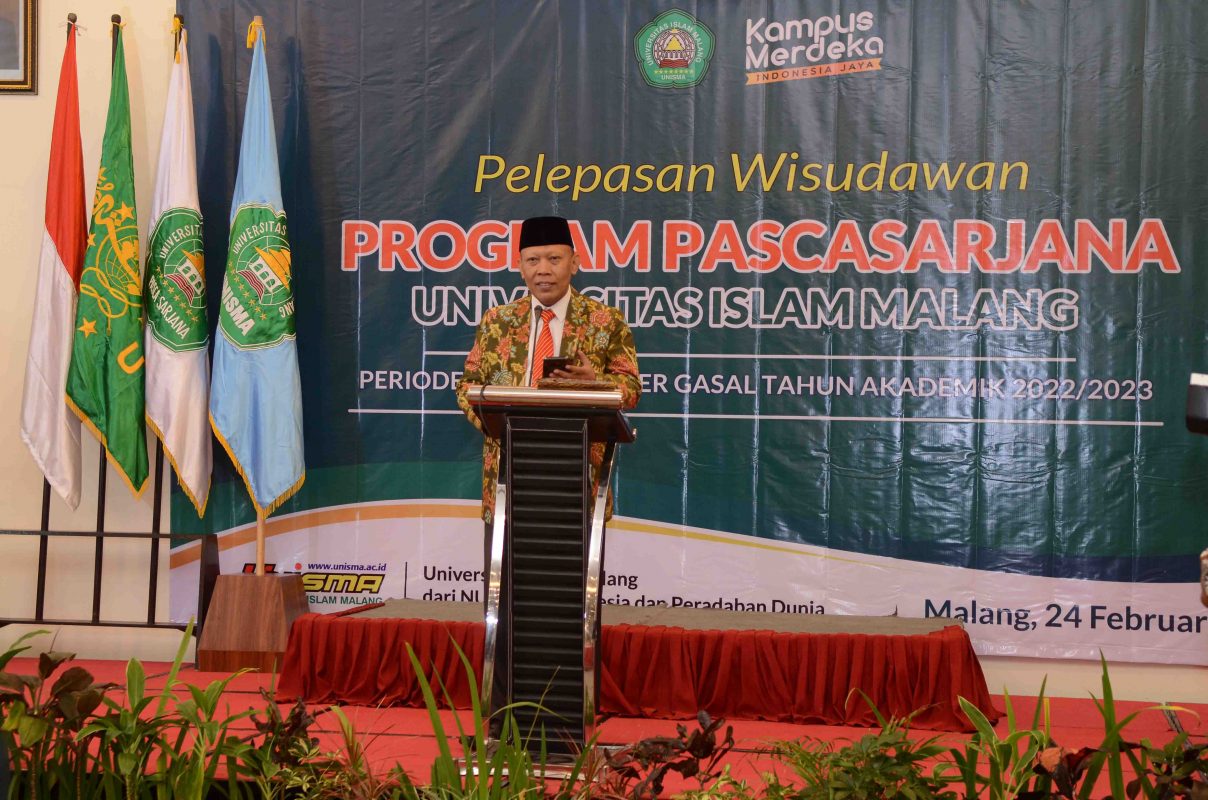
Unisma Rector, Prof. Dr. Maskuri, M.Si, shared the keys to success with the 69th cohort of master’s graduates. The key elements he highlighted included change, growth, reform, and sustainability.
This presentation was delivered at the graduation ceremony held yesterday (2/24). The event at the Swiss Bell-in Hotel was organized to send off the 69th cohort of graduates and to recognize those with the highest achievements.
Key Success Factors
According to Prof. Maskuri, M.Si, the first key process of success is change. Change is inevitable, so every graduate must adopt a mindset of change, ensuring their lives remain dynamic and constantly seek something better.
The second key process is growth. Growth is achieved through incremental changes. It can be observed both qualitatively and quantitatively.
The next key process is reform. Reform is a fundamental change in the structure of an organization or society. Reform is achieved through a continuous process of learning and change.
The final key process of success is sustainability. Sustainability must be present in every process of change. Without sustainability, every change, growth, and reform is meaningless.
Read also: Entitled Differentiated Instruction, KMM Successfully Held at STKIP PGRI Sumenep
Unisma’s Prestigious Alumni
This professor in Islamic Religious Education (PAI) emphasized that the relationship between alumni and Unisma is deeply intertwined. For Unisma, alumnae are a source of pride who continue to play an active role in society.
For alumni, Unisma is a place of learning and a place where teachers gain knowledge. The teacher-student relationship is eternal; there is no such thing as a “former teacher” within UNISMA.
UNISMA has been accredited as an “Excellent Campus”; UNISMA alumni have no reason to feel inferior. Students from all corners of the world also study at the best NU campus in Indonesia. For this reason, UNISMA is enhancing effective learning for international students.
The Rector of Unisma, who is also an Unisma alumnus, invites all alumni to take pride in Unisma’s progress and transformation. Even though alumni did not experience this learning process during their own time as students. (AL/PPS)
