
 Indonesia
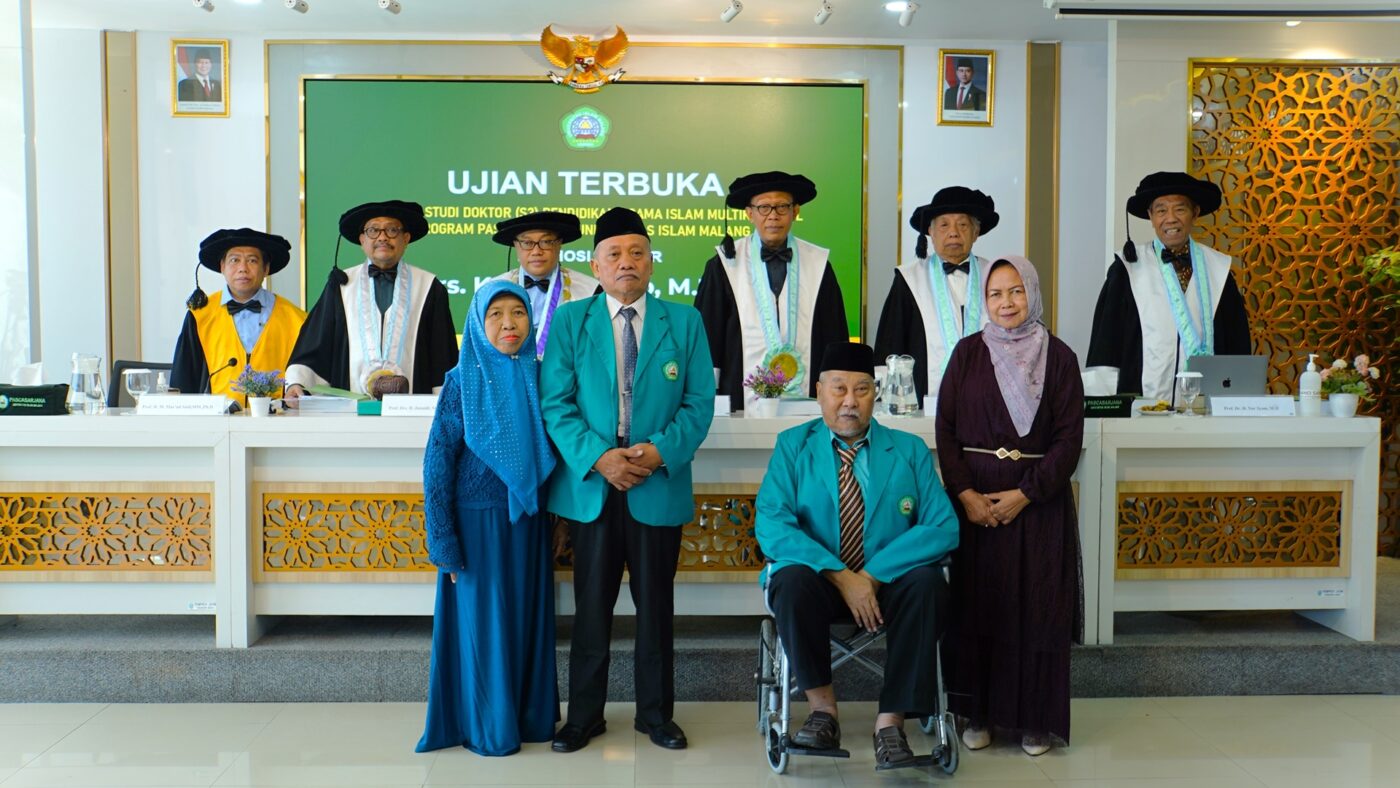
Malang – The path to a doctoral degree demands not only academic capability, but also unwavering perseverance in the face of adversity. This spirit was vividly on display at the open dissertation examination of the Doctoral Program (S3) in Islamic Education (PAI), Postgraduate Program of Universitas Islam Malang (UNISMA), held on Monday, 3 August 2026.
3 candidates – Drs. Hidayatul Mustofa, M.Pd.I., Kandarismanto, and Muammar Najib uccessfully defended their dissertations before the examination panel. Each addressed a distinct research theme, yet all three were bound by a common thread: the development of Islamic education in shaping human beings of ethics, religiosity, and strong character.
Pressing On Despite Poor Health
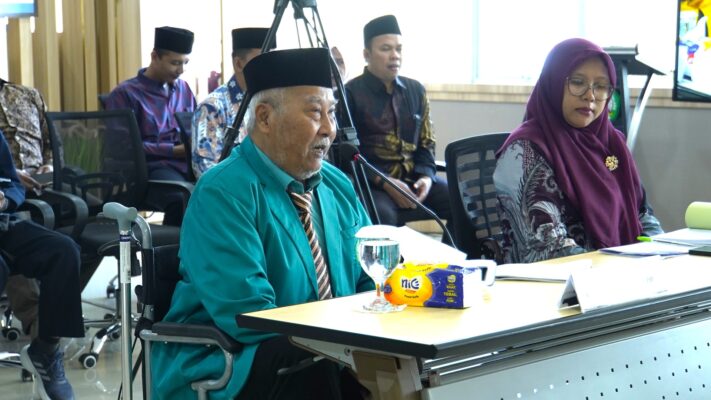
One of the most compelling stories of the day came from Hidayatul Mustofa. Despite being in a state of diminished health, he persisted in sitting his examination, defending a dissertation titled “Building the Ethics and Morality of the Millennial Generation from the Perspective of Multicultural Islamic Education at the Islamic Religious Institution Al Muhammad Cepu.”
His determination earned recognition from the examination panel. Hidayatul was commended for the steadfastness he demonstrated throughout the doctoral process from the decision to continue his studies through to reaching this final stage of the open dissertation examination.
He encapsulated this spirit through the motto:
“Innallaha la yughayyiru biqoumin hatta yughayyiru ma bi anfusihim” “Indeed, Allah will not change the condition of a people until they change what is within themselves.”
For Hidayatul, the journey toward a doctoral degree was never merely about fulfilling an academic obligation, it was a process of continuous self-transformation and improvement. His condition on the day of examination did not stop him from completing the academic process he had set in motion.
Multiple Intelligences Beyond the Classroom
The second candidate, Kandarismanto, brought an exploration of the multiple intelligences approach through a dissertation titled “A Multiple Intelligences Approach to Enhancing Religiosity from the Perspective of Multicultural Islamic Education: An Ethnographic Study of the Learning Process at the Faculty of Tarbiyah and Teacher Training, Al Muhammad Islamic Religious Institute, Cepu.”
His research found that multiple intelligences is not merely applicable as a pedagogical approach within the learning process. Taken further, it can evolve into a driver of transformation at the institutional level of an educational establishment.
Kandarismanto’s research identified five dominant forms of intelligence: intrapersonal, interpersonal, verbal-linguistic, visual-spatial, and musical-rhythmic.
These five aspects illustrate how the diversity of intellectual potential can be directed to support the enhancement of religiosity understood in this study as the level of religious practice reflected through devotion and spirituality.
The findings expand the conceptual scope of multiple intelligences. The approach is not solely a tool for helping students learn according to their individual potential, but can also serve as part of a broader effort to build an educational culture conducive to the development of religiosity.
Multicultural Islamic Education Values as a Foundation for Santri Character
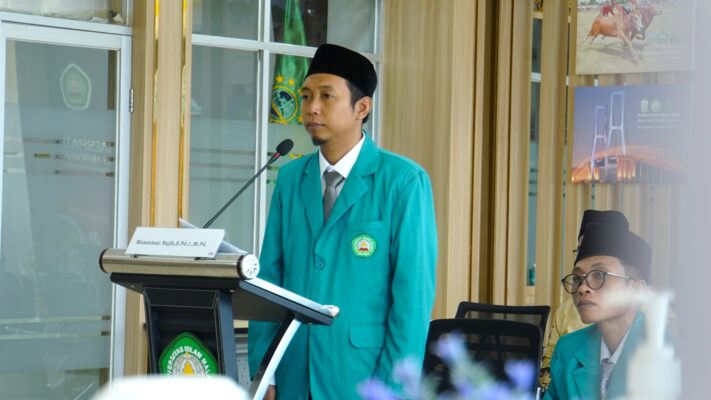
Meanwhile, Muammar Najib addressed the formation of santri character through a dissertation titled “The Values of Multicultural Islamic Education as a Driving Spirit in the Character Formation of Santri at Pondok Pesantren Sunan Bejagung, Tuban.”
His research positions the values of multicultural Islamic education as the animating spirit of the character formation process for santri. The study underscores the importance of education that is oriented not merely toward the mastery of Islamic knowledge, but also toward the cultivation of character within an increasingly diverse social life.
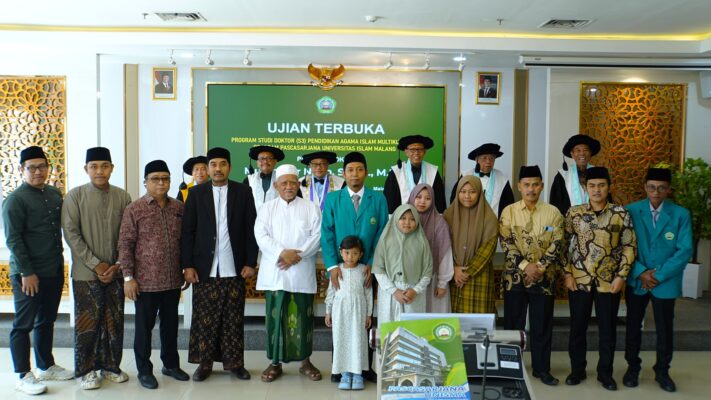
The Examination Panel
The open dissertation examination was chaired by the UNISMA Rector as Head of the Examination Panel, with the Postgraduate Program Director serving as Secretary. The remaining panel members comprised Prof. Dr. Nur Syam, M.Si.; Prof. Dr. Imam Suprayogo; Prof. Dr. Maskuri, M.Si.; and Dr. Moh. Afifulloh, M.Pd.
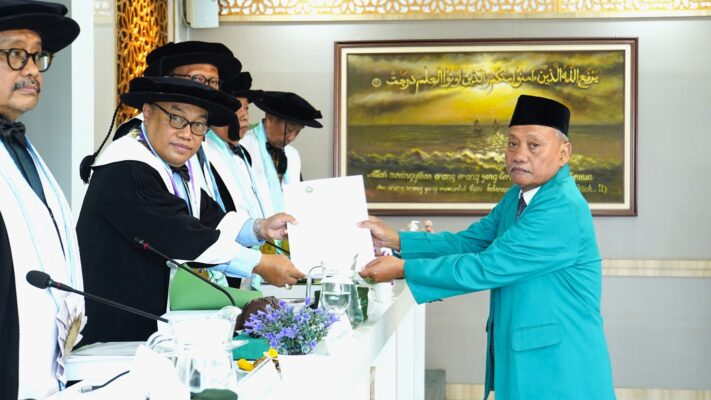
Upon completion of the examination and assessment process, all three candidates were declared to have passed. Hidayatul Mustofa graduated with a Memuaskan (Satisfactory) predicate, while Kandarismanto and Muammar Najib both achieved a Sangat Memuaskan (Distinction) predicate.
The dissertation examination marked the close of a lengthy academic chapter for all three candidates. More than a degree conferred, the three studies they presented carry ideas about how Islamic education can continue to contribute to the formation of generations endowed with ethics, religiosity, and strong character within an ever more diverse society.
