
 Indonesia
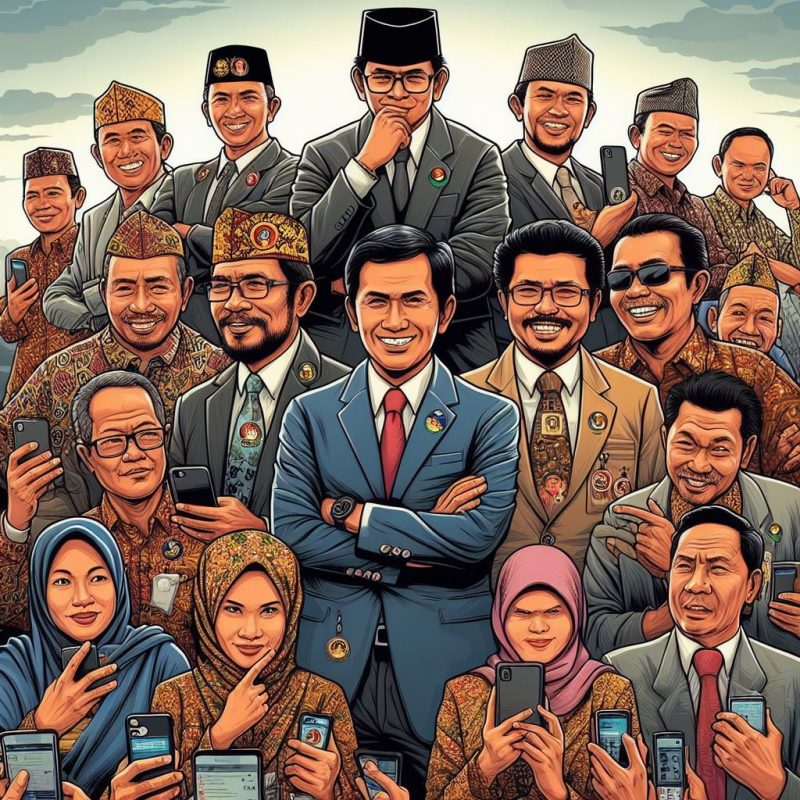
In today’s political landscape, where social media increasingly shapes public discourse. We are often presented with striking portrayals of “campaign teams” who appear capable of influencing the political arena through their online rhetoric. Yet behind this polished image lies a less romantic reality: campaign operatives who speak with confidence in the digital sphere despite lacking a solid grounding in political science.
Across political eras, social media has steadily expanded its role in mobilizing public attention. Problems arise, however, when digital communication skills are mistaken for genuine political understanding. Campaign teams caught in this dynamic often exemplify the phenomenon.
On social media, they present themselves as “political commentators,” posting statements and opinions that appear authoritative while revealing only a limited grasp of political substance. In many cases, this performance functions as a mask, concealing a deeper unfamiliarity with the foundations of political practice.
Ironically, their digital visibility frequently exposes that very void. Rather than encouraging thoughtful debate, the discourse often devolves into superficial commentary or worse, the circulation of hoaxes and misleading narratives designed primarily to attract attention.
Read also: Is Social Conflict Inevitable? Navigating Justice Amid Competition and Order
Social media undeniably offers a wide platform for public expression. Yet the space becomes problematic when it is dominated by voices that follow trends without analytical depth. When such voices grow louder, a fundamental question emerges: where is the substance and wisdom that should guide political conversation?
Behind the digital spotlight, these campaign teams sometimes occupy a far weaker position than they appear. In practice, they may function merely as amplifiers for political actors promoting narratives without the capacity to interrogate or critically evaluate them.
Political communication carries a significant responsibility, particularly in shaping public opinion. When campaign teams with limited political literacy assert themselves as arbiters of truth on social media, that responsibility becomes distorted. They appear to guard the flame of political discourse, yet lack the expertise required to manage the fire they ignite.
It would be unfair to place the entire burden on these individuals. Various factors may contribute to their role, ranging from the pursuit of recognition to encouragement from political elites themselves. Nevertheless, the risks remain clear when individuals without sufficient political knowledge confidently proclaim “truth” in the public digital sphere.
Read also: Conflict Dynamics and Resolution: A Multidimensional Perspective
For an increasingly connected society, the responsibility ultimately lies with the public to approach information circulating on social media with discernment. Citizens must resist the allure of spectacle presented by campaign teams devoid of substantive political insight. Instead, a more critical reading of online discourse is essential recognizing that the courage to speak loudly is not always accompanied by a deep understanding of politics.
Author: Imam Alfafan Yakub
