
 Indonesia
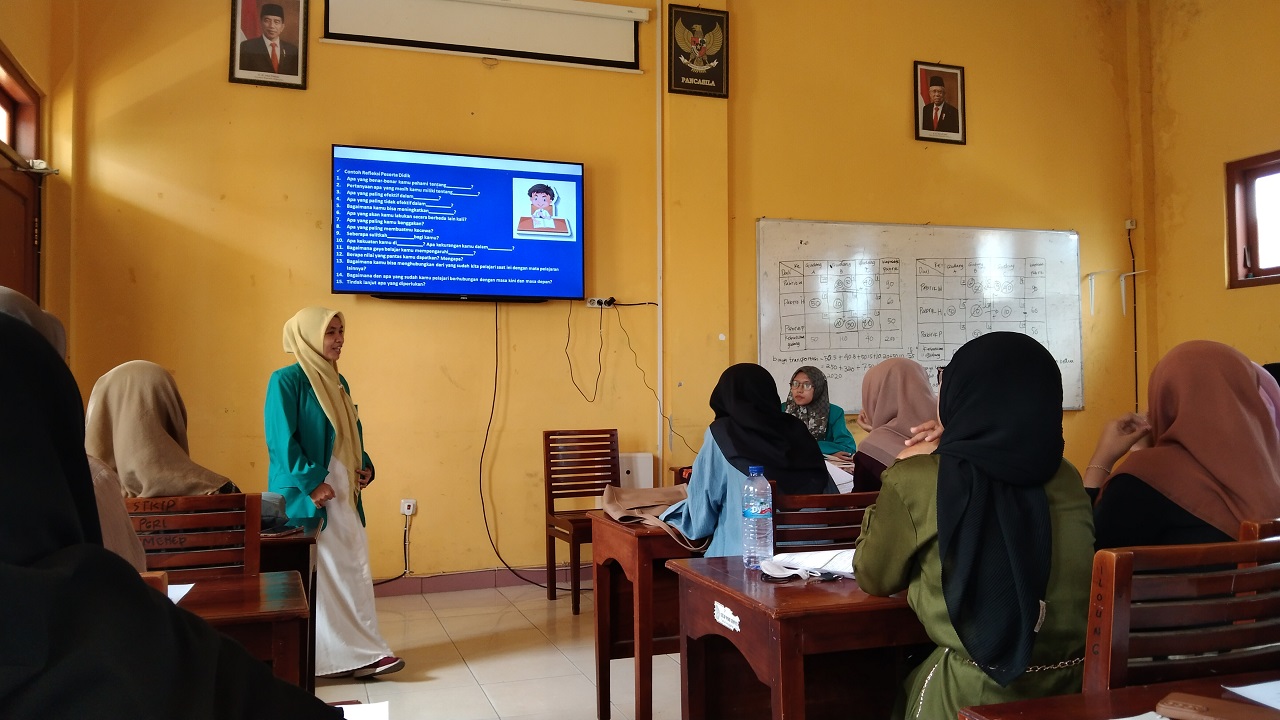
Sumenep – Third-semester Master’s students in Mathematics Education at Universitas Islam Malang (Unisma) successfully held the Master’s Candidate Community Service (KMM) program on Thursday (December 14, 2023).
The event, themed “Differentiated Instruction,” was attended by dozens of Mathematics Education students from STKIP PGRI Sumenep.
What is Differentiated Instruction?
Akh. Fauzi explained during the event that differentiated instruction is a learning process where students can study learning materials according to their abilities, preferences, and individual needs.
“This ensures students do not experience frustration or feel like they have failed in their learning experiences,” he said on Thursday (December 14, 2023).
Furthermore, he explained that differentiated instruction provides flexibility and is able to accommodate students’ needs. These needs align with enhancing their potential in accordance with their varying levels of readiness, interests, and learning profiles.
Read also: Pamekasan Regent Highlights Education Equity During UNISMA Postgraduate Visit
“There are four characteristics of differentiated learning: (1) it focuses on learning competencies, (2) the assessment of students’ readiness and learning progress is integrated into the curriculum, (3) student grouping is conducted flexibly, and (4) students become active learners,” she detailed.
Meanwhile, Fitria added that students have three distinct learning needs: students’ readiness to learn, students’ learning profiles, and students’ interests.
Furthermore, she noted that students’ learning profiles refer to preferences regarding the learning environment, learning style preferences, cultural influences, and multiple intelligences.
“Meanwhile, learning readiness encompasses fundamental-transformative, concrete-abstract, simple-complex, structured-open, dependent-independent, and slow-fast dimensions,” she explained.
“Learning styles also include auditory (learning by listening), visual (learning by seeing), and kinesthetic (learning by doing),” she added.
The Aspects
Next, Febrianti explained the four aspects of Differentiated Instruction: content differentiation, process differentiation, product differentiation, and environmental differentiation.
Content refers to the material taught or presented to students. In the content aspect of implementing differentiated instruction, an educator differentiates based on what students will learn during the learning process.
“Additionally, an educator must be able to identify what each student needs to learn,” she emphasized.
Meanwhile, the process should vary according to the students’ learning styles, activities, and groupings.
“Through process differentiation, students will receive new learning information and be provided with learning methods suited to their abilities,” she emphasized.
Read also: KMM Unisma Implements AI-Based Learning Using Canva


Siti Nur Jamilah then added that environmental differentiation refers to conditions, influences, and stimuli originating from the external environment that affect students.
“A supportive learning environment can optimize classroom conditions both physically and psychologically. These conditions will help students learn both independently and in groups,” she explained.
Finally, differentiation in products refers to variations in the outcomes of learning tasks or variations in the assessment of student learning outcomes.
“Tasks and assessments for each student are made diverse but still align with the same learning objectives,” she stated.
