
 Indonesia
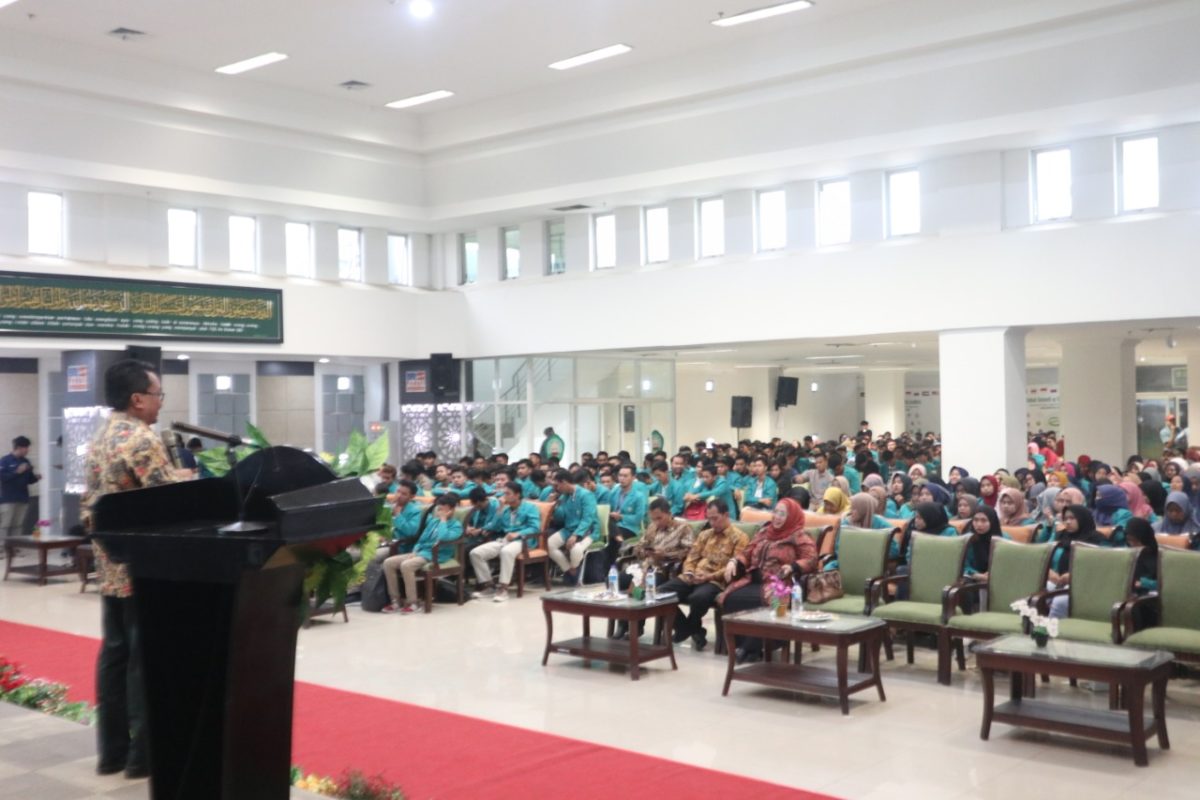
Prof. M. Mas’ud Said, MM., Ph.D., Director of Postgraduate Programs, presented the 4 ideal personal pillars to 400 FEB students participating in Studium Generale: Student Leadership and Management Training (LKMM) of Faculty of Economics and Business 2019. The event took place on December 16, 2019, in Abdurrrahman Wahid Hall on the 7th floor of Ali bin Abi Tholibin Building. This LKMM was attended by first-semester students from various programs, including Management, Accounting, and Islamic Banking.
The agenda was opened by the Dean of FEB Universitas Islam Malang and proceeded in a lively atmosphere. Ms. Nur Diana, SE., M.Si, as the Dean of FEB, emphasized the importance of fostering leadership. She expressed her hope that FEB Unisma would be able to nurture future national leaders.
See also: Unisma’s Master of Management Program Holds PSQA Self-Evaluation for Study Program
Prof. Mas’ud outlined the four pillars of ideal character: academic excellence, strong socio-political skills, distinctive professional skills, and a high level of spirituality/religious devotion. These four pillars of an ideal individual are shaped by family, environment, and organizations. The strategic environmental structure that supports the development of ideal human resources includes: family, education, social circles, talent development, organizations, and protection from drug abuse and moral hazards.
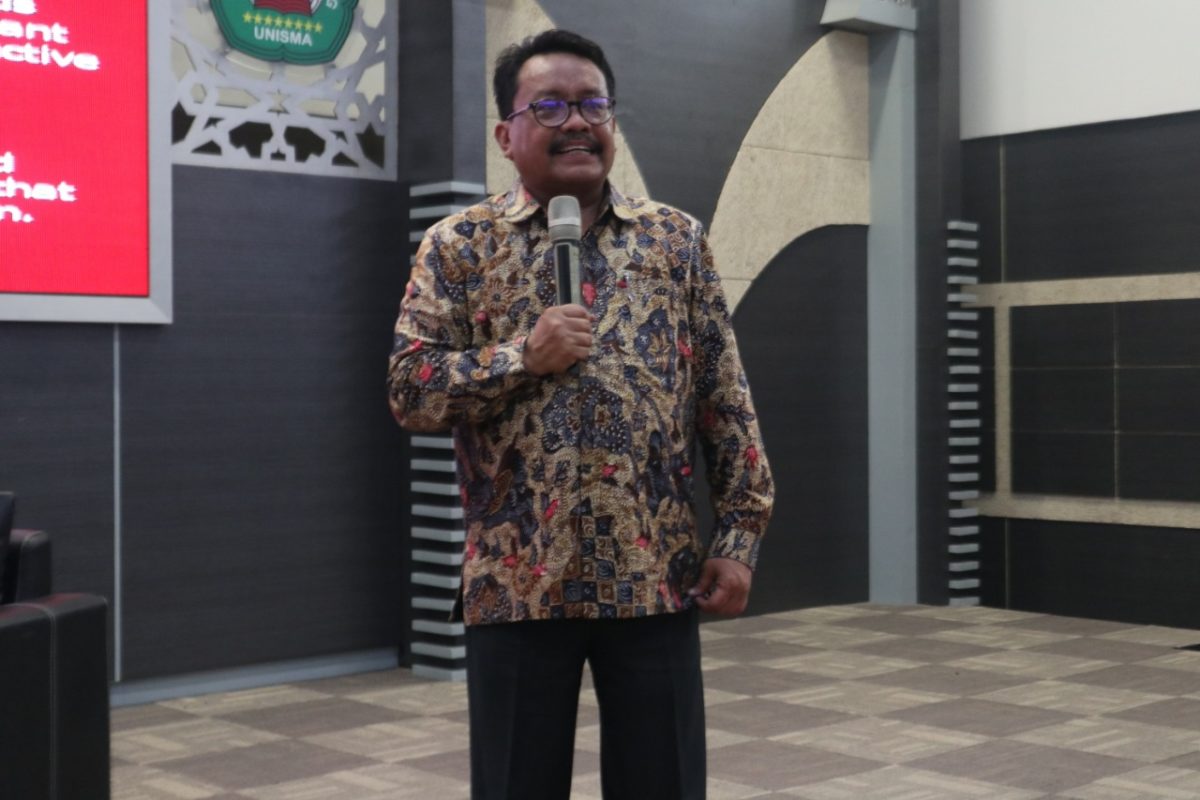
Prof. Masud Said addressing 400 FEB students participating in LKMM
Prof. Masud Said also shared tips on becoming a high-quality individual, which are key to academic success. The professor of Administrative Science provided these tips as a supplement to the pillars of a high-quality individual.
Read also: Final Meeting on The Draft Guidelines for Writing Master’s Theses in Management
These tips for success include (1) a commitment to quality education, (2) honing and developing positive talents, (3) growing through professional networks, and (4) strengthening communication through language, IT, and constructive relationships. According to Prof. Mas’ud, the keys to academic success include: social maturity, individual attitude, collaboration, consistent practice, intelligence, and sound strategy.
