
 Indonesia
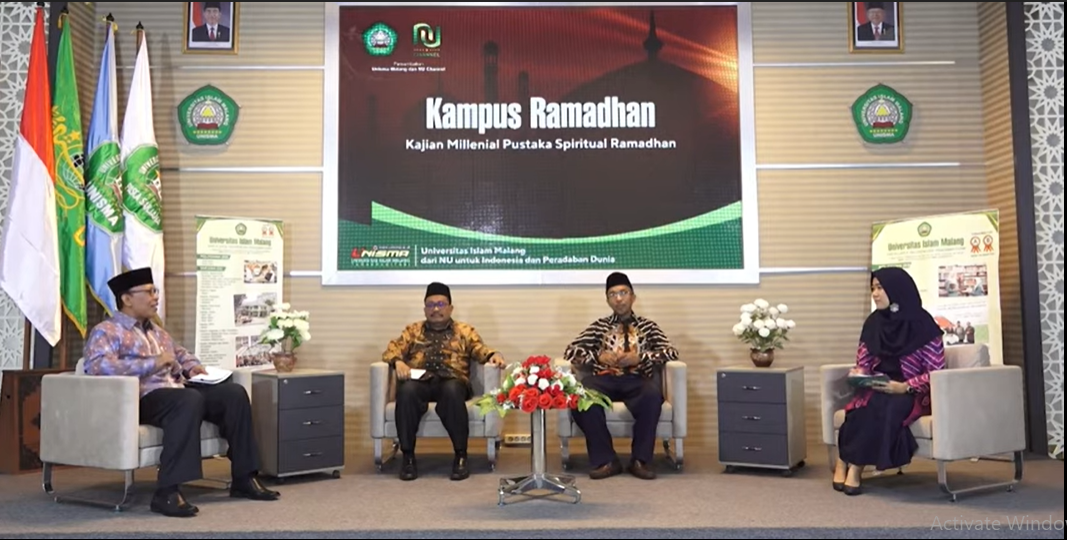
The Director of the UNISMA Postgraduate Program, Prof. M. Mas’ud Said, MM., Ph.D., alongside Deputy Director II, Dr. Rulam Ahmadi, M.Pd., served as the driving force behind the promotion of research-based science and technology development at Universitas Islam Malang (UNISMA), particularly within the Postgraduate Program. This was conveyed when both figures appeared as resource persons on Episode 16 of Kampus Ramadhan, broadcast on Saturday, 9 May 2020. The collaborative programme between NU Channel and Universitas Islam Malang was held under the theme “Research-Based Science and Technology Development.”
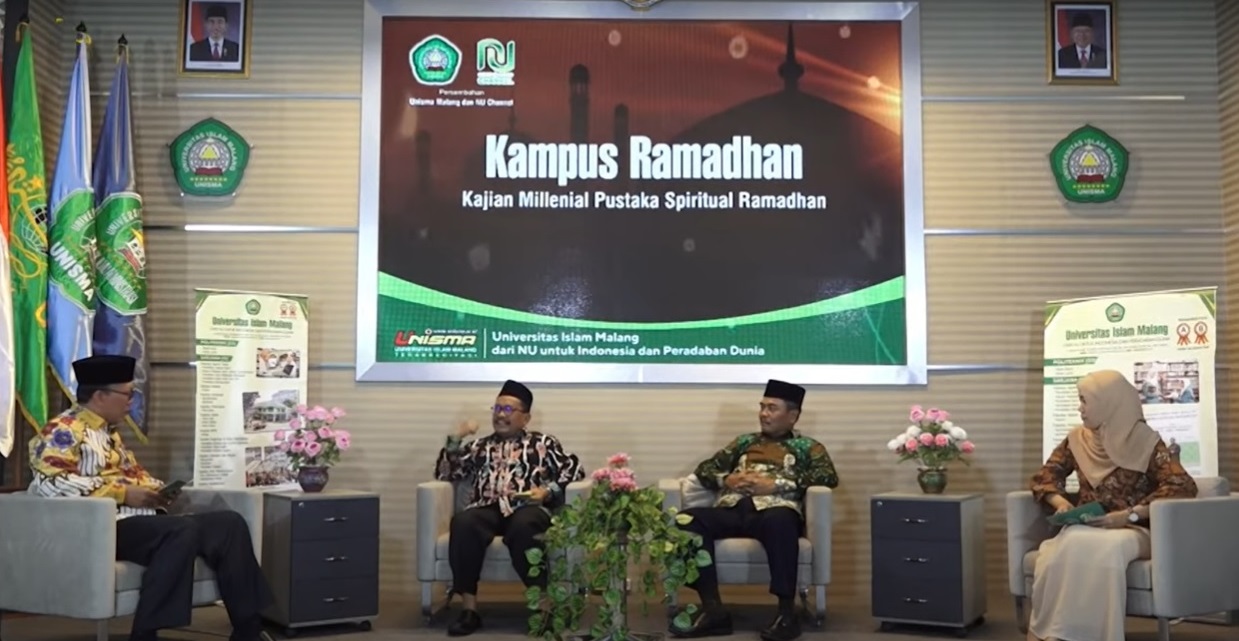
16th Edition of Ramadan Campus Poster
The talkshow, aired ahead of the evening iftar (breaking of fast), underscored the critical importance of research as the foundation for development, asserting that any meaningful advancement must be grounded in empirical inquiry. One of the primary reasons why Indonesia’s research culture has yet to reach the level seen in Western nations, it was noted, is the absence of a well-established writing tradition.
Indonesia’s intellectual tradition remains largely rooted in storytelling and reading, rather than in systematic research and academic writing. This deficit has given rise to the perception that Indonesian universities function as little more than ivory towers institutions that have yet to demonstrate their capacity to address real societal challenges. “We know that khoirun naasi anfa’uhum linnasi the best among people are those most beneficial to others. By that measure, the finest university is the one most capable of serving the needs of society,” explained Dr. Rulam Ahmadi.
Read also: Sustaining Online Lecturing in the Pandemic Era
As Director of the UNISMA Postgraduate Program, Prof. M. Mas’ud Said, MM., Ph.D., elaborated that the Postgraduate Program is currently advancing research-based science and technology through a 3+1 research implementation scheme. The first three schemes encompass supervised research — including the supervision of theses and dissertations.
The second scheme encourages lecturers to conduct independent research, with findings compiled into publications that subsequently serve as teaching materials within the university. The third scheme involves students directly in the research process, enabling meaningful transfer of knowledge between lecturers and students. The “+1” component of the scheme refers to equivalency, the balance between in-class and out-of-class learning activities.
Out-of-class learning activities are conducted at institutions or offices of national standing. This approach is grounded in an andragogical framework, an upgrade from conventional pedagogy. “Indoor classroom instruction is less effective for our students. Particularly the lecture-style model for adult education given that most of our doctoral students are themselves nationally recognised public speakers. How can we lecture those who already lecture to the nation?” the Professor of Administrative Science quipped with a smile.
The programme, hosted by UNISMA Rector, emphasised the pivotal role of research-based science and technology development across all spheres of life. In the context of higher education, it was affirmed that the pinnacle of student achievement is not memorisation, reading, or writing but rather the capacity to translate research findings into practical, applicable solutions for society.
A piece of research is deemed meaningful when it achieves three things: it produces a new discovery, it can be developed or implemented, and it generates tangible financial or social value. (NAD/AL/PPS)
