
 Indonesia
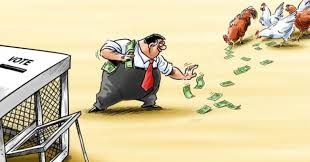
Today, the practice of democracy in this country remains deeply mired in various complex issues. According to a 2021 report by The Economist Intelligence Unit (EIU), Indonesia’s democracy index still ranks 52nd in the world. This fact is particularly striking because Indonesia is a country that claims to be a democracy, having practiced it for quite some time, yet it remains comfortably stuck at the bottom of the rankings.
Money politics is a scourge that is one of the reasons why Indonesia receives a poor rating in terms of democracy. According to the results of a survey by Burhanuddin et al. (2019), the level of electoral fraud through money politics was between 20% and 35% in 2019.
It is a collective conclusion that money politics is the most heinous crime in the pursuit of a mature democracy. This is because money politics can lead to corruption. When public officials accept bribes, they may act in their own personal interests rather than the public interest. This can result in decisions that harm the public, such as budget embezzlement or the issuance of unfair permits.
According to Alexander Marwata, Deputy Chairman of the Corruption Eradication Commission (KPK), the high cost of politics in Indonesia to become a representative of the people or a regional head is one of the factors contributing to corruption. Money politics is one of the practices that can lead to political corruption. Money politics, often referred to as the “mother of corruption,” is a major and frequently occurring issue in Indonesia.
Money politics is also a form of non-multicultural behavior. This is because such despicable acts contradict the principles of multicultural democracy. Multicultural democracy is a democracy that recognizes and respects the cultural diversity and identities of the people. Money politics, on the other hand, can be used to exploit cultural diversity and the identities of the people for political gain.
Read also: False Loyalty: Behind the Smiles of Politicians’ Campaign Teams and Money Politics
There are several ways in which money politics can be considered a non-multicultural act. First, money politics can be used to co-opt the votes of minorities. Minority groups are often underrepresented in the political process, and money politics can be used to buy their votes. This can lead minorities to feel undervalued and isolated from the political process.
Second, money politics can be used to perpetuate the status quo. Groups in power often use money politics to maintain their power. This can make it difficult for minority groups to achieve the changes they desire. Third, money politics can be used to spread hatred and discrimination. Groups promoting harmful agendas can use money politics to spread their messages. This can lead to tension and conflict within society.
Author: Imam Alfafan Yakub
