
 Indonesia
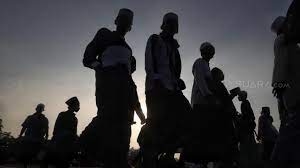
One of the greatest blessings that Allah SWT has bestowed upon the people of the end times is the sending of the most noble and perfect Prophet in every respect. His speech was full of gentleness. His demeanor was extremely polite. He respected his elders and valued the younger ones. His conduct was exemplary and truthful.
Exactly on Monday, the 12th of Rabi’ al-Awwal, the Messenger of Allah (peace be upon him) was born. His birth brought mercy not only to humanity but also to the entire universe, which felt the mercy of his arrival. The heavens and the earth rejoiced greatly. The land, which had previously been barren and arid, became fertile and prosperous. Trees that had never borne fruit before began to bear fruit in celebration of the birth of a man who would one day become the leader of humanity, a prophet and messenger.
At the same time, Allah revealed His holiness and majesty. The truth has come, and falsehood will soon vanish. This was marked by the destruction of the symbols of misguidance. The sacred fire worshipped by the Magi in the Persian temple, which had never gone out before, suddenly went out. The sturdy idols in the Ka’bah suddenly collapsed.
Not only did this occur in the city of Makkah, but a shocking event also took place in the Roman Empire, where all statues and other symbols of idolatry suddenly crumbled and collapsed. Thus, when Allah intends to display His greatness, all will perish and nothing will remain, except the affirmation that He is the Almighty. Nothing can rival Him in any way. Such are some of the signs of Allah’s power manifested alongside the birth of Prophet Muhammad (peace be upon him). Therefore, for Muslims, the month of Rabi’ al-Awwal is a day of great historical significance and extraordinary importance. The day when the most noble Prophet was born, and the doctrine of tawhid (monotheism) toward Allah, which had previously been lost, was once again spread far and wide.
Today, all those heroic tales have become part of Islamic history that will continue to be remembered and recited during every celebration of the Prophet’s birthday in the month of Rabi’ al-Awwal. Muslims believe that his birth marked the dawn of divine guidance. Therefore, Muslims gather in large numbers to celebrate his birthday as an expression of gratitude to Allah SWT for sending the most perfect Prophet.
Debate Regarding the Maulid Celebration
Scholars, who are also historians, differ in their opinions regarding who first held a maulid ceremony as we know it today, whether among the salaf (classical) scholars or the khalaf (contemporary) scholars. However, what is certain is that the celebration of the Prophet’s birthday is not a new phenomenon in Islamic history. Sheikh Jalaluddin Abdurrahman bin Abu Bakar as-Suyuthi (d. 991 AH), in his book, classifies the celebration of the Prophet’s birthday—which includes the recitation of Quranic verses, the narration of the Prophet’s biography, and concluding with a communal meal as a “good innovation” (bid’ah hasanah), wherein those who perform it will receive reward, as it involves honoring the Prophet and expressing joy over his birth. As for the first person to organize a ceremonial celebration of the Prophet’s birthday, it was King Mudhaffar, one of the noble and great rulers of Irbil. Imam Suyuti states in his Scripture;
وَأَوَّلُ مَنْ أَحْدَثَ فِعْلَ ذَلِكَ صَاحِبُ اِرْبِل الَملِكُ الْمُظَفَّر أَبُوْ سَعِيْد كُوْكْبَرِي بِنْ زَيِنِ الدِّيْنِ عَلِي اِبْنِ بَكْتَكينْ أَحَدُ الْمُلُوْكِ الْأَمْجَادِ وَالكُبَرَاءِ الْأَجْوَادِ وَكَانَ لَهُ آثَارٌ حَسَنَةٌ، وَهُوَ الَّذِي عَمَّرَ الجَامِعَ الْمُظَفَّرِي بِسَفْحِ قَاسِيُوْنَ
It means: “The first person to hold that ceremony (maulid nabi) was the ruler of Irbil, namely King Mudhaffar Abu Said Kuukuburi bin Zainuddin Ali ibn Buktitin, a noble, great, and generous king. He also had a good track record. And, it was he who continued the construction of the al-Mudhaffari Mosque at the foot of Mount Qasiyun.” (Imam as-Suyuthi, al-Hawi lil Fatawi, [Beirut, Darul Fikr: 2004], vol. I, p. 182).
In line with Imam as-Suyuthi’s opinion above, Sheikh Muhammad bin Ali asy-Syaukani (d. 1250 AH), in one of his books, stated that the first person to hold a maulid ceremony was King Mudhaffar.
وَأَجْمَعُوْا أَنَّ الْمُخْتَرِعَ لَهُ السُّلْطَانُ الْمُظَفَّر أَبُوْ سَعِيْد كُوْكْبَرِي
It means: “The scholars have agreed that the first to hold the maulid ceremony was King Mudhaffar Abu Said Kuukuburi.” (Imam as-Syaukani, al-Fathur Rabbani min Fatawa Imam as-Syaukani, [Yemen, Maktabah Jailul Jadid: n.d.], vol. I, p. 1087).
Contrary to the above opinion, Sheikh Hasan as-Sandubi, an Egyptian Islamic historian, states in his book that the first to hold the Prophet’s birthday celebration was the Fatimid dynasty. One of the dynasties founded by Ubaid al-Mahdi. In his book, it is mentioned:
لَقَدْ دَلَّنِي البَحْثُ عَلَى أَنَّ الْفَاطِمِيِّيْنَ هُمْ أَوَّلُ مَنْ اِبْتَدَعَ فِكْرَةَ الْاِحْتِفَالِ بِذِكْرَى الْمَوْلِدِ النَّبَوِي
Meaning: “Indeed, the discussion (above) has shown me that the Fatimid dynasty was the first group to implement the idea of celebrating the birth of the Prophet Muhammad.” (Hasan as-Sundawi, Tarikhul Ihtifal bil Maulidin Nabawi, [Matba’ah al-Istiqamah, first edition: 1980], pp. 60–65).
However, celebrations during the Fatimid dynasty did not focus solely on the Prophet’s birthday; rather, they also celebrated other seasonal occasions, such as the birthday of Sayyidina Ali, the birthday of Sayyidah Fatimah, the birthdays of Sayyidina Hasan and Husain, and several other birthday celebrations. (And Allah knows best.)
Author: Moh Nadhif
