
 Indonesia
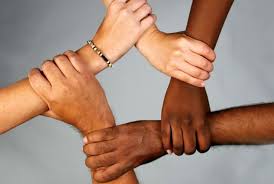
We do not deny that Indonesia is a multicultural country. It is an undeniable fact that Indonesia is composed of diverse cultures, ethnic groups, languages, and religions. However, can Indonesian society be described as a multicultural society? Regarding this, there is certainly still much to discuss.
One of the main characteristics of a multicultural society is the willingness to respect and live with differences. Cultural differences are not viewed as problems or sources of conflict, but rather as a treasure to be preserved. For example, differences in religion and interpretations of religious texts are each respected. No one is considered superior to another. The same applies to culture. No specific ethnic group or nation is superior to another. Such an understanding ultimately fosters an attitude of equality toward others, eliminating the notion of labeling them as “the other.”
The root of the conflict in the West between white and Black communities also stems from racial arrogance that views white people as superior to Black people. White people are considered to belong to a superior race and to be better educated, while Black people are viewed as belonging to an inferior race, uneducated, and born as “slaves.” It is this kind of assumption that has given rise to the negative attitudes and behavior of white people toward Black people; as we know, these conflicts still exist and occur in Europe and America to this day.
So, does such a thing not exist in our society? That is precisely the problem. We have indeed lived with diversity for years, giving rise to the famous motto, “Bhinneka Tunggal Ika.” However, in reality, our society is still not accustomed to accepting and respecting differences. A small example: we still frequently encounter the tendency to associate crime or criminal behavior with specific ethnic groups. The most frequent victims of this are people from the East. People from the East are generalized as troublemakers. In reality, the elders and traditional communities of the East do not teach their children to cause riots or commit other criminal acts. Even if some of them commit criminal acts, it cannot be generalized that all Easterners are like that, just as criminal behavior is also committed by members of other ethnic groups, including Javanese. And we know that when Javanese people commit criminal acts, we never attribute it to their Javanese ethnicity.
Madurese people are also often victims of racism in Indonesian society. In some Twitter comments I’ve read, Madurese people are called dirty, scruffy, loud-mouthed, and so on. Even if there are dirty Madurese people, does that mean it’s a cultural norm so that all Madurese people are dirty? Dirty people and criminals exist in all communities and social groups. Therefore, such behaviors shouldn’t be associated with a specific ethnic group while simultaneously viewing other groups as superior.
These are just a few small examples that we can encounter in the real world. There are many other examples, whether regarding speech patterns, behavior, and so on. Sometimes we forget that standards of morality and politeness do differ, and we impose our own standards of morality and politeness on others, thereby causing rudeness and so on.
Does this mean we must condone all differences? Does it mean that even if someone does wrong, we must still defend them? Of course, this is where the importance of understanding universal values comes in. These universal values are not limited by geography; they are not confined by ethnicity or language. Such universal values, for example, pertain to justice and humanity. Acts of corruption, theft, causing harm, harassment, and taking another person’s life must certainly be addressed and should not be tolerated, regardless of the reason.
Starting with the Little Things
So how do we cultivate a multicultural mindset? In my opinion, it can start with accepting differences. This, of course, is a long process. However, it can be practiced through small things in our daily lives. We don’t need to look as far as differences in religion and religious teachings; it’s enough to practice understanding others’ choices that differ from our own.
To be honest, we’re simply not used to seeing people who are different from us. One small example is the choice not to eat rice. When we see someone not eating rice, we find it strange and assume their choice is wrong—because Indonesians are accustomed to eating large portions of rice to meet their body’s carbohydrate needs. Consequently, it’s not uncommon for those who don’t eat rice to face ridicule. Some even link it to religion, accusing them of failing to be grateful for God’s blessings. Yet, if we’re honest, have they violated any values by not eating rice? Does their choice harm anyone? Of course not, but we struggle to accept it simply because it’s different from our own.
Another example that often draws ridicule from others is the choice not to rush into marriage in order to pursue one’s goals, for instance. Women are often the ones who bear the brunt of this. Women who do not marry immediately are considered unmarriageable. Yet sometimes they simply want to continue their education, pursue their career goals, or pursue other aspirations. However, we often fail to understand this, simply because it differs from the common perception. In the common perception, women should marry young, don’t need to pursue higher education, let alone work to build a career. The reason is simple: in their view, a woman’s role is solely that of a homemaker. This is where we must ask: is it wrong for someone to delay marriage to pursue knowledge? To build a career? To achieve their aspirations? Isn’t marriage a personal decision, and isn’t it the individual who will be held accountable for it, both socially and religiously?
What we need to realize is that, just like us, everyone is free to make their own choices and doesn’t have to be the same as us. Once we realize that other people’s choices don’t have to align with ours, then slowly but surely, we’ll get used to seeing differences. We’ll come to accept those differences as an inevitable part of life. Differences aren’t something to be feared, but rather an unavoidable reality. With this understanding, we will grow accustomed to seeing differences, living with them, and appreciating them. It may start with small things and everyday life, but this behavior will eventually develop on its own, becoming our worldview in how we perceive differences within a broader context.
Author: Paisun
