
 Indonesia
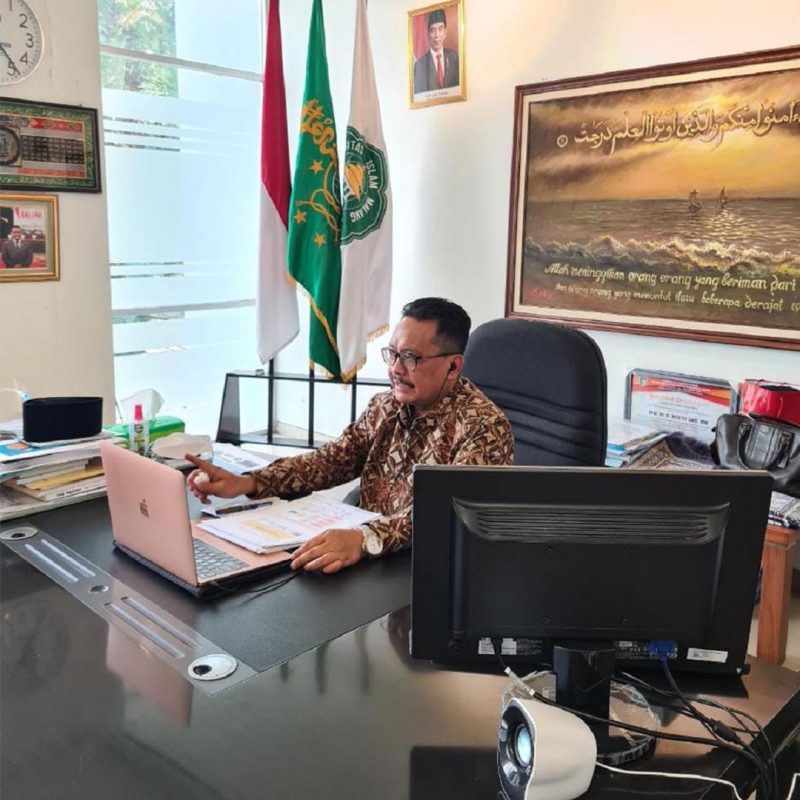
Friday, May 7, 2021 – M. Mas’ud Said, PhD, presented on the urgency of bureaucratic reform within government structures during a session with the Vice President’s Secretariat. The presentation took place during a Limited Discussion themed “Evaluating Bureaucratic Reform Implementation from a Public and Non-Government Sector Perspective,” beginning at 8:30 AM.
The discussion drew participants from across the State Palace, including officials and staff from the State Secretariat, Cabinet Secretariat, Vice President’s Secretariat, Presidential Special Staff Office, and the Presidential Advisory Council Secretariat.
Read also: Prof. M. Mas’ud Said Appointed by East Java’s Indonesian Researchers Association (HIMPENINDO)
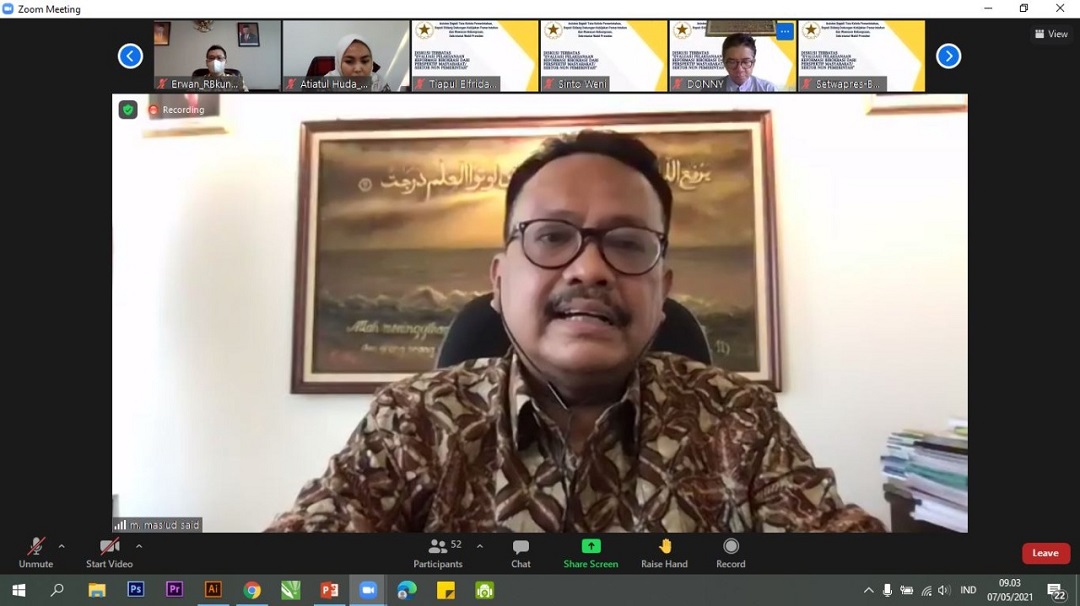
Prof. Mas’ud Said discussing alongside the Vice President’s Secretariat team and academic and non-governmental figures
The Flinders University alumnus emphasized that bureaucracy fundamentally rests on four interconnected pillars: structure, culture, personnel, and systems, all of which serve as critical variables in achieving successful bureaucratic reform.
The discussion covered bureaucracy at the national level as well as provincial and regency or city levels. Prof. Mas’ud Said expressed concern over regulations that fail to align with realities on the ground, pointing to a mismatch between national and regional policies and the actual needs of local areas.
The professor of government studies identified at least four critical issues essential to any bureaucratic reform strategy: service orientation, systems and facilities, environmental support capacity, and connectivity and accessibility.
Prof. Mas’ud Said’s proposal to incorporate young IT specialists and senior expert officials into the development of electronic-based government systems proved especially relevant, an area that has remained largely absent from the national bureaucratic reform framework until now.
Read also: Postgraduate Program Prepares Curriculum Design in the Spirit of MBKM
Prof. Mas’ud Said explained that reform must be pursued as a continuous, ongoing process, since bureaucratic reform is, at its core, synonymous with change itself. He expressed confidence that successful bureaucratic reform depends on identifying strong role models and best practices emerging across different levels of government.
Unisma’s Postgraduate Program gained a notable point of pride through this engagement: drawing on Prof. M. Mas’ud Said’s experience and expertise, the program was able to contribute meaningful academic input at the national policy level. (AL/PPS)
