
 Indonesia
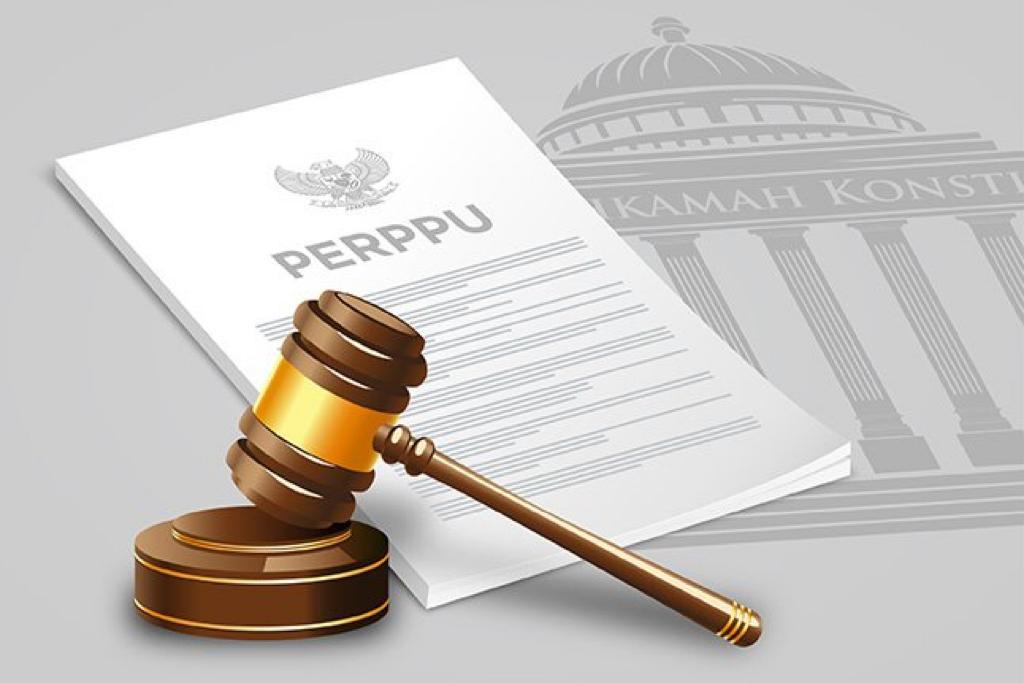
Any state that has enshrined its constitution as supreme, treating legal norms as the very foundation of national life, inevitably carries the label of a rule of law state. Philosopher Franz Magnis Suseno identifies at least four moral political reasons societies demand governance grounded in law: legal certainty, equal treatment, democratic legitimacy, and the demands of reason itself.
Magnis Suseno’s argument makes one thing clear: no state can function without law. Law’s presence proves that a state does more than merely exist; it actively governs itself, regulates its relationship with citizens, and mediates relationships among citizens themselves. The obligations of both state and citizen are measured against the boundaries the law lays out. It is precisely in this regulatory role that law emerges as a strategic, normative instrument for building and reinforcing democracy.
This is the very foundation on which a state earns the right to call itself a rule of law state. Law stands as the chief guardian of national life, and among its central duties is upholding and realizing democratic governance. The legal norms that dictate permitted and prohibited conduct ultimately determine the direction democracy takes.
The renowned legal thinker Von Savigny argued that the rule of law cannot be separated from the concept of democratic governance. Just law exists, and can only be enforced, within a democratic state. There, law is shaped as a response to the aspirations of the people, making it truly of the people, by the people, and for the people.
Historically, the term “rechtsstaat” (rule of law state) emerged in the 19th century, later than other constitutional concepts such as democracy, constitution, and sovereignty. According to Soediman Kartohadiprodjo, the term was first coined by Rudolf von Gneist, a professor in Berlin, though the underlying concept of a rule of law state dates back to the 17th century, born alongside resistance to absolute, authoritarian, and arbitrary rule. Theoretically, the concept arose as a reaction against traditional notions of state sovereignty proposed by thinkers such as Augustine and Thomas Aquinas (divine sovereignty), Machiavelli, Paul Laband, and Georg Jellinek (state power theory), Jean Bodin (royal sovereignty), Thomas Hobbes (social contract theory, homo homini lupus), Rousseau, Montesquieu, and John Locke (popular sovereignty), and Hugo Grotius, Krabbe, and Léon Duguit (legal sovereignty, or supremacy of law).
Joeniarto defined the rule of law, or “the rule of law” principle, as requiring that every action taken by both rulers and citizens rest on legal grounds rather than sheer power, with the explicit purpose of limiting state authority and safeguarding the public interest, particularly the protection of human rights against arbitrary action.
That view underscores just how strategic law’s position is in governing national life. A ruler’s authority is legitimate only insofar as it rests on the law in force; every action and every exercise of discretion must trace back to legal grounding. This reliance on law isn’t meant to serve the convenience of those in power; it serves the broader interests of the nation. Given that, manipulating the law for personal or political gain should be strictly forbidden. What’s required instead is constant vigilance: a sustained commitment to protecting the practice of democracy from anything that erodes its legal normativity.
Hugo Krabbe, a professor at Leiden University, offers a useful distinction: “law,” in the context of a rule of law state, refers not merely to formally enacted statutes but to the law that lives within society; formal law holds true only insofar as it aligns with substantive law, the living legal conscience of the people. Friedrich Julius Stahl, meanwhile, held that a genuine rule of law state must satisfy four elements: guaranteed human rights, separation of powers, governance grounded in legislation, and administrative courts.
Where the concept of the rule of law fails in practice, particularly in its implementation, the standing of the rule of law state itself becomes tainted. What should be a rule of law state risks being recast as a state of raw power, with law reduced to a subordinate instrument of that power.
The exercise of authority, and the day to day workings of government, must not, in any of its strategic dimensions, slide into legal deviation. Every wielder of power bears the responsibility to protect the rule of law from contamination, whether the threat originates from external forces or from within their own ranks.
By: Dr. Drs. H. M. Muhibbin, S.H., M.Hum
Head of the Master’s in Law Studies Program, Postgraduate Program, Universitas Islam Malang, and author of several books
This article was also published on timesindonesia.co.id
