
 Indonesia
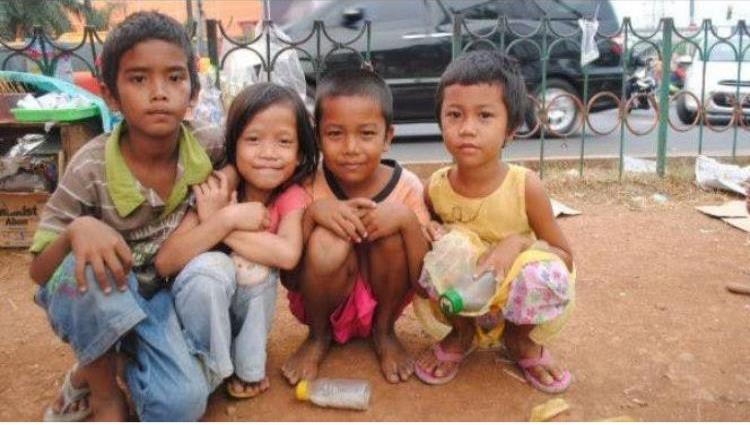
Can we still call ourselves a society rooted in community and popular welfare when we’re more preoccupied with ourselves, our parties, our cronies, or narrow exclusive interests, even as children across the country remain trapped in pockets of ignorance, illiteracy chief among them? Do we still deserve to be labeled a Pancasila-based society when millions of citizens remain mired in powerlessness, a direct consequence of poor education?
Judged purely on legal grounds, we fall short of being a society genuinely focused on education. Article 4, Paragraph (1) of Law No. 20 of 2003 on the National Education System mandates that education be conducted democratically, equitably, and without discrimination, upholding human rights, religious values, cultural values, and the nation’s diversity.
That legal framework makes one thing clear: the education system should be designed with the real conditions of society in mind. Education cannot serve only the elite while forgetting the ordinary. Marginalized communities hold the same fundamental rights as anyone else including freedom from ignorance and the poverty of knowledge.
The persistence of illiteracy among children from poor families stands as concrete evidence that we, the government, in particular have yet to treat education as a serious priority. Officials remain preoccupied with education’s surface appeal: enrollment revenue, gleaming school buildings while the substance of education that would genuinely free the poor from illiteracy and educational hardship goes neglected.
Such practice amounts to a serious breach of legal norms governing the right to education. The principles of justice and dignity that education is meant to uphold are instead being trampled. Rather than treating the poor as a priority for equitable schooling, the system leaves them behind and as a result, poverty and illiteracy have become almost synonymous.
This legal failing carries a religious dimension too. Faith itself demands that social afflictions like ignorance be eradicated. No religion condones a family, community, or nation raising a weak generation and illiteracy is precisely the mark of that weakness.
How could any nation build strength on the back of a generation crippled by poor education? A country only thrives in the hands of a generation of liberators, learners whose work lies in freeing others from educational backwardness and ushering in genuine enlightenment.
The Prophet Muhammad (peace be upon him) once undertook a remarkable initiative to free his companions from illiteracy. His method: conscripting literate prisoners of war as teachers, an educational “sentence” that required them to teach reading, writing, and arithmetic until illiteracy among his companions was overcome.
That episode offers a lesson worth reflecting on today. The Prophet showed the courage of a leader willing to make a revolutionary decision in education entrusting prisoners of a different faith and ideology with the task of teaching his own followers.
When it came to the transfer of knowledge, differences in religion and ideology were never allowed to stand in the way of progress. The Prophet understood, with remarkable foresight, that the foundation of any society’s advancement rests on the quality of its human capital. Islam cannot illuminate society if its own preachers and adherents remain undereducated.
The companion Ali once said that anyone who teaches him a single letter becomes his teacher for life, a statement that captures the essence of knowledge’s value to society. From a single letter, a person can begin to explore, to inquire, and eventually to engage in deeper scholarly reasoning.
That same insight underscores just how vital the transfer of knowledge is. That millions remain illiterate today points to a breakdown in that very process a stark divide between those who are educated and financially empowered, and the poor left behind, powerless and illiterate, by a transformation that has stalled.
By: Dr. Drs. H. M. Muhibbin, S.H., M.Hum
Head of Masters in Law Studies Program, Postgraduate Program, Universitas Islam Malang, and author of several books
This article was also published on timesindonesia.co.id
