
 Indonesia
A while ago, the Corruption Eradication Commission (KPK) arrested the Regent of East Kutai along with his wife, as well as the Chairman of the Regional Legislative Council. All have been named as suspects.
The arrests dealt a stinging blow to Indonesia’s standing as a rule-of-law state. Why is it that those already sufficiently remunerated by the state still choose to embroil themselves in corrupt practices. Practices that not only tarnish the institution of power they represent, but actively erode Indonesia’s dignity as a nation governed by law? What purpose does the identity of a rule-of-law state serve when those entrusted with its custodianship are the very ones defiling it?
The desecration of the rule of law becomes unavoidable when those charged with its protection opt instead to consecrate, to absolutise the pursuit of money, positioning it as an instrument that must be obtained at any cost.
Read also: Crisis Management in the New Normal: How Organisations Can Navigate and Recover
The eminent philosopher Aristotle warned: “The higher the esteem in which a person holds wealth (money), the lower their regard for the values of truth, morality, justice, and propriety.”
Aristotle’s words ring true. The Greek philosopher was reminding us of the causality formula, the cause-and-effect relationship that underpins the emergence and proliferation of crime within society and in the life of the state, all rooted in the consecration of money.
When a person or group of people by identity power-seekers and wielders of position still stumbles into the worship or absolutisation of money, then any and all norms, including those of religion and law, can be trampled underfoot without hesitation.
The magnetic pull of money has proven extraordinary for some elements of this nation’s law enforcement. Its influence is powerful enough to strip individuals of their moral, educational, spiritual, and legal intelligence. Its allure causes officials and bureaucrats to capitulate and surrender to its dominion. Powerful elites such as regents, council chairpersons, and others are overcome — and some even come to relish their own defeat.
Indeed, many state actors who are educationally accomplished or well-learned including law enforcement officials seem content to be “creative” in involving themselves in the misappropriation of public funds.
They are willing to become corruptors, and feel no shame in degrading themselves through the criminalisation of their own office. They are brazen enough to override their own intelligence and learning by “plundering” wealth that is not rightfully theirs.
The established status and scholarly credentials of individuals or groups within the judicial, executive, and legislative spheres have, in many instances, placed them among the most prominent actors in the world of corruption.
Such individuals are not only capable of personally enjoying the criminalisation of their office they can also enlist, collaborate with, or encourage other parties to become “invisible hands,” drawing in complicit business actors to join their ranks.
The pattern of criminalisation that operates in this manner makes at least one thing legible: there are multiple “invisible hands” involved in architecting and facilitating the machinery of corruption.
Within this framework, corruption becomes all the more easily executed when connected to other forces that mediate and provide the various instruments that smooth its path.
This becomes increasingly apparent when the supremacy of these “invisible hands” is intertwined with the calculation of significant state financial losses. The logic follows that such cases give rise to mass, collective corruption designed not merely to secure personal gain, but to provide mutual protection in the process of purifying the modus operandi of a criminal enterprise that may, in fact, be far more serious in nature.
Mutual protection is the defining characteristic of collective corruption. The larger the network constructed, the stronger the political resistance it mounts against law enforcement officials and those who champion truth and justice.
This dynamic manifests when one of the corrupt actors is caught or detected by law enforcement. Mutual protection is demonstrated, among other ways, through testimonies designed to obscure the truth, casting doubt and potentially causing law enforcement to falter.
Juwita W., in Fenomena Korupsi Berjamaah di Indonesia (The Phenomenon of Collective Corruption in Indonesia, 2012), notes that the modus operandi of collective corruption in Indonesia closely resembles a Multi-Level Marketing (MLM) system.
Within that system, lower-level employees of an institution are frequently deployed as frontline operatives. The money obtained by lower-level employees is passed upward through the chain of command, all the way to the apex of leadership. Lower-level employees bear the greatest risk, while receiving the smallest share of the proceeds.
Under this system, should anything go wrong outside the script, it is the lower-level employees who are sacrificed first sent to prison or positioned as scapegoats. Senior figures with political connections and substantial “plunder” at their disposal have the capital to escape the reach of the law.
The suspects in high-profile collective corruption cases currently dominating the media are, in reality, nothing more than pawns. Were all perpetrators of collective corruption to be brought before the courts hypothetically speaking this nation might well collapse or lose all semblance of dignity, given the sheer scale of those involved.
Hasibuan (2015) once warned: “A nation can become a hollow shell when each of its pillars is mired in practices that continuously erode the power of any and all norms particularly juridical norms.”
Read also: Synergy, Transformation, and Innovation: The Path to Indonesia’s Economic Recovery
This paradigm of corruption reveals that the power of the collective or organisational network remains in the hands of those who control the “invisible hands.” The owner of these invisible hands, such as those who offer substantial bribes represents a strategic element that reaps the greatest benefit, and may ultimately emerge as the most advantaged party at the conclusion of the legal process.
Reading this pattern, the ideal is that KPK investigators feel challenged professionally tested by the “invisible hands” of the corruptors. Corruptors will not allow themselves or their networks to be defeated by the KPK without a fight. They will continue to expand their “training,” continuously strengthening their networks in the relentless pursuit of ever-greater sums of money.
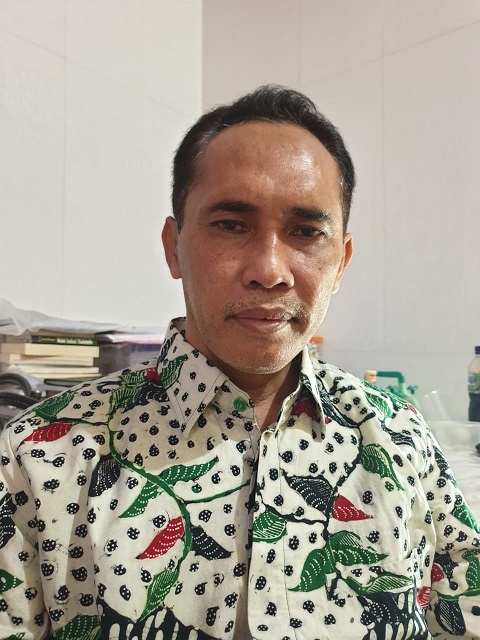
By: Dr. Drs. H. M. Muhibbin, SH., M.Hum., Head of the Master’s Program in Law, Postgraduate Program, Universitas Islam Malang, and author of several books
This article was also published at malangpost.com
