
 Indonesia
Jakarta – Before the fasting month arrived, we found ourselves living in a state of profound psychological shock. This was the consequence of a virus for which no cure had yet been found a virus that had already claimed thousands of lives among confirmed COVID-19 patients, while thousands more queued for hospital care.
Two months before Ramadan, this uninvited guest arrived, bringing with it uncertainty, social alienation, and mass anxiety fuelled by relentless media coverage. The ripple effects followed swiftly: weakening public purchasing power, workers and employees sent home, the informal business sector ground to a halt, state financial capacity diminished, and the tourism, transportation, industry, and services sectors brought to a standstill.
By mid-May five months into the pandemic everything remained a riddle. Advanced technology, brilliant minds racing to compete, the might of global superpowers in America and Europe laid bare in their fragility, and even the world’s finest health laboratories and experts thrown into disarray.
Then, mercifully, Ramadan arrived. This is the month known also as syahru al-tarbiyah, the month of education and formation. A time in which we, individually and collectively, as families, communities, and as a nation, are called to learn and to change. Fasting is syahru al-taubah, a month of momentum for repentance, a gateway to social and spiritual renewal in its truest and most profound sense.
A Reminder from Allah SWT
If we are honest with ourselves and willing to reflect, perhaps something has gone wrong. Including what the Prophet Muhammad (peace be upon him) described as yuhibbuunaddunya wayansaunal akhiroh, loving this world excessively while forgetting the life of the hereafter. Perhaps we are among those who have gone astray, servants who are more enamoured with wealth and material possessions, yuhibbunal maala wa yanshaunal hisab, and have consequently forgotten the day of reckoning.
Perhaps the angels have reported to God that we naudzubillahi min dhaalik are among those who yuhibbuunal khalqah wayansaunal khaliqah: who, openly or in secret, give greater love and attention to the creation of Allah while forgetting the Creator Himself.
It may be that we are among the ummah who yuhibbunaddzunubah wayansaunat-taubah, who are more inclined toward sinful acts yet neglect to turn back in repentance to Allah SWT. And perhaps in the angels’ records, many of us are listed as yuhibbunal qusuroh wayansaunal fahfaroh, those who are drawn to grand buildings and lavish homes, but have forgotten the grave and the Day of Judgement, upon which we shall all dwell eternally.
Then, mercifully, Ramadan arrived.
As believers, we are called to remain vigilant without losing our sense of gratitude. Even in times of tribulation, we are asked to hold fast to optimism. The people of faith are a people of conviction steadfast in the belief that good will prevail and patient in the face of adversity.
No Prophet or Messenger lived free from heavy burdens. Yet every Prophet and Messenger was one who refused to be subdued by obstacles, threats, hardship, or circumstances that pressed and constrained them from every side.
In this month of profound wisdom, we must be filled with hope. As the essence of the book by Aidh al-Qarni, Laa Tahzan. Do Not Grieve reminds us, the Arabic work invites us to embrace optimism. Al-Qarni cites the supplication of the Prophet Musa (Moses, peace be upon him): “Ya Allah, my Lord, expand my breast for me, and ease my task for me,” as recorded in Surah Taha, verses 25–26. Rabbisrohli shadri wayassirli amri.
All are being tested with a profoundly unsettling trial. Social systems built over centuries, particularly those of human gathering and congregation appear to be crumbling. Are we permitted to despair? The answer is: walaa tai’asuu min rauhillah. Laa tahzan, innallaha maana do not lose hope in the mercy of Allah. Do not grieve, for Allah is with us. This is God’s way of bringing about change.
Turning Directions Toward Goodness
Like the stories of nations before us who fell into heedlessness, we seem to have been compelled to turn our course toward goodness. Fasting and COVID-19 are both a whip and a guiding rope. If we are honest in our reckoning, we are in deficit, we have been at a loss.
We have been ceaselessly blessed with sustenance, the gift of knowledge, the blessing of health, the health of our hands, our feet, our eyes, our sense of taste, our sense of hearing, the gift of sustenance, the blessing of freedom, the wholeness of family, and the gift of clean air. These blessings far outweigh the hardships of the Large-Scale Social Restrictions (PSBB) or any other tribulation.
We must therefore engage in muhasabah, honest self-accounting, acknowledge our shortcomings and return in repentance to Allah SWT. Only Allah knows the way. This is His ayat kauniyah, a cosmic sign. Perhaps, in the name of goodness, we have deserved a measure of hardship for our own negligence. We must either change, or be changed by circumstances that compel us. This is how God reminds us.
According to the masters of Sufi tradition, there remain vast oceans of gratitude and blessing that Allah has bestowed upon us. Do not despair rise up, and turn to these blessings by sharing goodness with others. Alhamdulillah, we are all gradually rising through the blessings of the fast. Nothing that God has created is in vain all things carry wisdom.
Fasting and COVID-19 are a divine secret, instruments of Allah SWT. The path of repentance and the cessation of wrongdoing lies in abundant istighfar (seeking forgiveness) and dzikir (remembrance of God), in performing the prayer of repentance, and in making a sincere personal commitment to strive with all one’s strength to correct one’s wrongs before Allah SWT.
It feels as though we must seek forgiveness for our wrongs toward others toward our parents who raised us through great hardship, and toward those who secured the freedom of this nation, which we have forgotten to cherish and preserve.
Wallahu a’lam bi al-shawab.
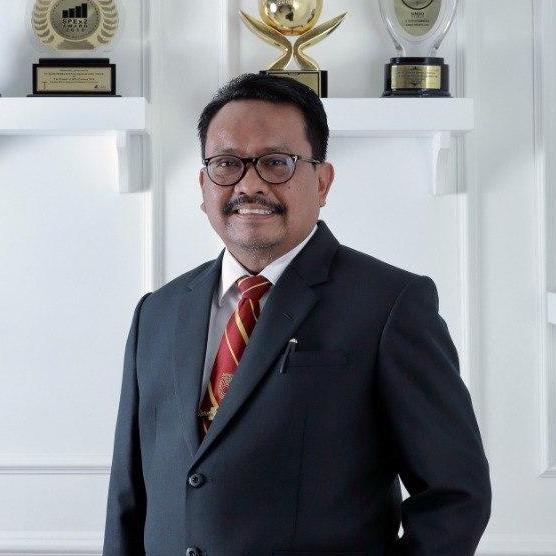
M. Mas’ud Said — Director of the Postgraduate Program, Universitas Islam Malang; Chairman of ISNU East Java
* This article was previously published on Detik.com Reader and Kompas Berita.
