
 Indonesia
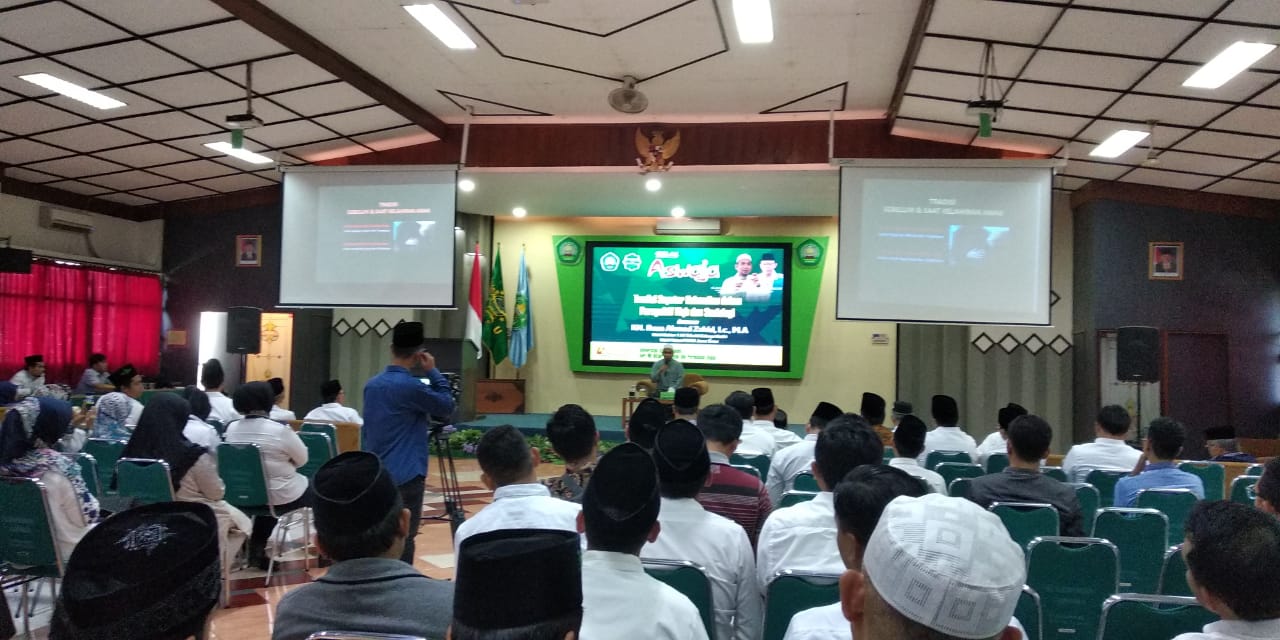
Dr. KH. Reza Ahmad Zahid, Lc., M.A., shared insightful marriage advice with the faculty and staff of Universitas Islam Malang (UNISMA) during the Mbalah Aswaja forum on February 19, 2019. The event’s theme centered on “Traditions Surrounding Pregnancy from the Perspectives of Fiqh (Islamic Jurisprudence) and Sociology.” Widely known as Gus Reza, the East Java-based cleric is recognized as an engaging, millennial-friendly religious figure who is frequently featured as a guest on national television broadcasts.
His first piece of advice emphasized the importance of supplication (doa). He highlighted that prayer is a believer’s most potent weapon, underscoring that every endeavor undertaken by a Muslim should commence with a prayer.
Recommended prayer is as follows:
Bismillahilaliyil Adzimi. Allohumma’jalhaa Zurriyyatan Toyyibatan In Kunta Qoddarta An Takhruja Dzaalika Min Sulbi.
Meaning:
“In the name of Allah, the Most Great and Supreme. YaAllah, make my wife as the cause of my righteous offspring, if You have decreed that such offspring should come from my loins.”
Secondly, for couples desiring a male child, he suggested leaning to the right after reaching a climax (inzal). This specific guidance is derived from the teachings within the Qurrotu Uyun, a classical text authored by Imam Muhammad al-Tahami bin Madani.
Also read: UNISMA Postgraduate Program Holds Coordination Meeting Ahead of New Student Admissions
The third tip advises the husband to place his hands on his wife’s chest, in an affectionate embrace and gently stroke downwards to her navel. He noted that this particular practice should be continued until the third month of pregnancy.
From a sociological standpoint, this intimate physical connection significantly enhances and sustains marital harmony.
Fourthly, if a couple wishes for a female child, they are encouraged to frequently recite Surah Maryam. The caretaker of the Al-Mahrusyiyah Islamic Boarding School in Lirboyo, Kediri, explained that this serves as a subconscious method to learn how to raise a pious daughter in the exemplary manner of Sayyidah Maryam (Mary).
Through these shared insights, it is hoped that the attendees gained a broader understanding of Islamic teachings, recognizing that the religion is not solely confined to ritual worship, but comprehensively touches upon every facet of a Muslim’s life.
